TOMM Associate Editor of the Year Award 2015

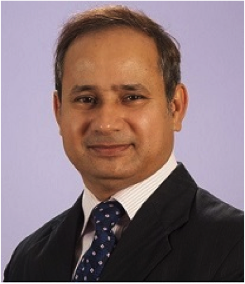
Annually, the Editor-in-Chief of the ACM Transactions on Multimedia Computing, Communications and Applications (TOMM) honors one member of the Editorial Board with the TOMM Associate Editor of the Year Award. The purpose of the award is the distinction of excellent work for ACM TOMM and hence also for the whole multimedia community in the previous year. Criteria for the award are (1.) the amount of submissions processed in time, (2.) the performance during the reviewing process and (3.) the accurate interaction with the reviewers in order to broader the awareness for the journal. Based on the criteria mentioned above, the ACM Transactions on Multimedia Computing, Communications and Applications Associate Editor of the Year Award 2015 goes to Pradeep Atrey from State University of New York, Albany, USA. pradeep-atreyPradeep K. Atrey is an Assistant Professor at the State University of New York, Albany, NY, USA. He is also an (on-leave) Associate Professor at the University of Winnipeg, Canada and an Adjunct Professor at University of Ottawa, Canada. He received his Ph.D. in Computer Science from the National University of Singapore, M.S. in Software Systems and B.Tech. in Computer Science and Engineering from India. He was a Postdoctoral Researcher at the Multimedia Communications Research Laboratory, University of Ottawa, Canada. His current research interests are in the area of Security and Privacy with a focus on multimedia surveillance and privacy, multimedia security, secure-domain cloud-based large-scale multimedia analytics, and social media. He has authored/co-authored over 100 research articles at reputed ACM, IEEE, and Springer journals and conferences. His research has been funded by Canadian Govt. agencies NSERC and DFAIT, and by Govt. of Saudi Arabia. Dr. Atrey is on the editorial board of several journals including ACM Trans. on Multimedia Computing, Communications and Applications, ETRI Journal and IEEE Communications Society Review Letters. He was also guest editor for Springer Multimedia Systems and Multimedia Tools and Applications journals. He has been associated with over 40 international conferences/workshops in various roles such as Organizing Chair, Program Chair, Publicity Chair, Web Chair, Area Chair, Demo Chair and TPC Member. Dr. Atrey was a recipient of the Erica and Arnold Rogers Award for Excellence in Research and Scholarship (2014), ETRI Journal Best Editor Award (2012), ETRI Journal Best Reviewer Award (2009) and the three University of Winnipeg Merit Awards for Exceptional Performance (2010, 2012 and 2013). He was also recognized as “ICME 2011 – Quality Reviewer” and is invited as a Rising Star Speaker at the SIGMM Inaugural Multimedia Frontier Workshop (2015). The Editor-in-Chief Prof. Dr.-Ing. Ralf Steinmetz cordially congratulates Pradeep.

2015 ACM Transactions on Multimedia Computing, Communications and Applications (TOMM) Nicolas D. Georganas Best Paper Award

The 2015 ACM Transactions on Multimedia Computing, Communications and Applications (TOMM) Nicolas D. Georganas Best Paper Award is provided to the paper “A Quality of Experience Model for Haptic Virtual Environments” (TOMM vol.10, Issue 3) by Abdelwahab Hamam, Abdulmotaleb El Saddik and Jihad Alja’am.

The purpose of the named award is to recognize the most significant work in ACM TOMM (formerly TOMCCAP) in a given calendar year. The whole readership of ACM TOMM was invited to nominate articles which were published in Volume 10 (2014). Based on the nominations the winner has been chosen by the TOMM Editorial Board. The main assessment criteria have been quality, novelty, timeliness, clarity of presentation, in addition to relevance to multimedia computing, communications, and applications.

The winning paper is grounded on the observation that so far there is only limited research on Quality of Experience (QoE) for Haptic-based Virtual Reality applications. In order to overcome this issue, the authors propose a human-centric taxonomy for the evaluation of QoE for haptic virtual environments. The QoE evaluation is applied through a fuzzy logic inference model. The taxonomy also gives guidelines for the evaluation of other multi-modal multimedia systems. This multi-modality was one of the main reasons for the selection of this article and TOMM members expect that it will have an impact on future QoE studies in various sub-fields of multimedia research.

The award honors the founding Editor-in-Chief of TOMM, Nicolas D. Georganas, for his outstanding contributions to the field of multimedia computing and his significant contributions to ACM. He exceedingly influenced the research and the whole multimedia community.

The Editor-in-Chief Prof. Dr.-Ing. Ralf Steinmetz and the Editorial Board of ACM TOMM cordially congratulate the winner. The award will be presented to the authors at the ACM Multimedia 2015 in Brisbane, Australia, and includes travel expenses for the winning authors.

abdelwahab-hamamAbdelwahab Hamam received his PhD in Electrical and Computer Engineering from the University of Ottawa, Canada, in 2013. He is currently a postdoctoral research scientist at Immersion in Montreal, Canada focusing in research and development of novel haptic technologies and interactions. He was previously a teaching and research assistant at the University of Ottawa from Jan 2005 to May 2013. He has more than 35 academic papers and pending patent applications. He is the recipient of the best paper award at the 2015 QoMEX workshop. He is the technical co-chair of the 2015 Haptic Audio-Visual Environments and Games (HAVE) Workshop and the co-organizer of the 2015 QoMEX workshop special session on quality of experience in haptics. His research interests include haptic applications, medical simulations, and quality of experience for multimedia haptics.

abed-el-saddikAbdulmotaleb El Saddik is Distinguished University Professor and University Research Chair in the School of Electrical Engineering and Computer Science at the University of Ottawa. He is an internationally-recognized scholar who has made strong contributions to the knowledge and understanding of multimedia computing, communications and applications. He has authored and co-authored four books and more than 450 publications. Chaired more than 50 conferences and workshop and has received research grants and contracts totaling more than $18 Mio. He has supervised more than 100 researchers. He received several international awards, among others ACM Distinguished Scientist, Fellow of the Engineering Institute of Canada, Fellow of the Canadian Academy of Engineers and Fellow of IEEE and IEEE Canada Computer Medal.

jihad-mohamed-aljaamJihad Mohamed Alja’am received the Ph.D. degree, MS. degree and BSc degree in computing from Southern University (The National Council for Scientific Research, CNRS), France. He was with IBM-Paris as Project Manager and with RTS-France as IT Consultant for several years. He is currently with the Department of Computer Science and Engineering at Qatar University. His current research interests include multimedia, assistive technology, learning systems, human–computer interaction, stochastic algorithms, artificial intelligence, information retrieval, and natural language processing. Dr. Alja’am is a member of the editorial boards of the Journal of Soft Computing, American Journal of Applied Sciences, Journal of Computing and Information Sciences, Journal of Computing and Information Technology, and Journal of Emerging Technologies in Web Intelligence. He acted as a scientific committee member of different international conferences (ACIT, SETIT, ICTTA, ACTEA, ICLAN, ICCCE, MESM, ICENCO, GMAG, CGIV, ICICS, and ICOST). He is a regular reviewer for the ACM computing review and the journal of supercomputing. He has collaborated with different researchers in Canada, France, Malaysia, and USA. He published so far 138 papers, 8 books chapters in computing and information technology which are published in conference proceedings, scientific books, and international journals. He is leading a research team in multimedia and assistive technology and collaborating in the Financial Watch and Intelligent Document Management System for Automatic Writer Identification projects.

ACM SIGMM Award for Outstanding PhD Thesis in Multimedia Computing, Communications and Applications 2015

Awardee

ting-yaoACM Special Interest Group on Multimedia (SIGMM) is pleased to present the 2015 SIGMM Outstanding Ph.D. Thesis Award to Dr. Ting Yao and Honorable Mention recognition to Dr. Britta Meixner.

The award committee considers Dr. Yao’s dissertation entitled “Multimedia Search by Self, External, and Crowdsourcing Knowledge” worthy of the recognition as the thesis proposes an innovative knowledge transfer framework for multimedia search which is expected to have significant impact, especially in boosting the search performance for big multimedia data.

Dr. Yao’s thesis proposes the knowledge transfer methodology in three multimedia search scenarios:

  1. Seeking consensus among multiple modalities in the context of search re-ranking,
  2. Leveraging external knowledge as a prior to be transferred to a problem that belongs to a domain different from the external knowledge, and
  3. Exploring the large user click-through data as crowdsourced human intelligence for annotation and search.

The effectiveness of the proposed framework has been successfully justified by thorough experiments. The proposed framework has substantial contributions in principled integration of multimodal data which is indispensable in multimedia search. The publications related to the thesis clearly demonstrate the major impact of this work in many research disciplines including multimedia, web, and information retrieval. The fact that parts of the proposed techniques have been and are being transferred to the commercial search service Bing further attest to the practical contributions of this thesis. Overall, the committee recognizes the significant impact and contributions presented in the thesis to the multimedia community.

Bio of Awardee

Dr. Ting Yao is an associate researcher in the Multimedia Search and Mining group at Microsoft Research, Beijing, China. His research interests are in multimedia search and computing. He completed a Ph.D. in Computer Science at City University of Hong Kong in 2014. He received the B.Sc. degree in theoretical and applied mechanics (2004), B.Eng. double degree in electronic information engineering (2004), and M.Eng. degree in signal and information processing (2008) all from the University of Science and Technology of China, Hefei, China. The system designed by him achieved the second place in the THUMOS action recognition challenge at CVPR 2015. He was also the principal designer of the image retrieval systems that achieved the third and fifth performance in the MSR-Bing image retrieval challenge at ACM MM 2014 and 2013, respectively. He received the Best Paper Award of ACM ICIMCS (2013).

Honorable Mention

britta-meixnerThe award committee is pleased to present the Honorable Mention to Dr. Britta Meixner for the thesis entitled: “Annotated Interactive Non-linear Video – Software Suite, Download and Cache Management.”

The thesis presents a fully functional software suite for authoring non-linear interactive videos with downloading and cache management mechanisms for effective video playback. The committee is significantly impressed by the thorough study presented in the thesis with extensive analysis of the properties of the software suite. The implementation which has been made available as open source software along with the thesis undoubtedly has very high potential impact to the multimedia community.

Bio of Awardee

Dr. Britta Meixner received her Master’s degree (German Diplom) in Computer Science from the University of Passau, Germany, in 2008. Furthermore, she received the First State Examination for Lectureship at Secondary Schools for the subjects Computer Science and Mathematics from the Bavarian State Ministry for Education and Culture in 2008. She received her Ph.D. degree from the University of Passau, Germany, in 2014. The title of her thesis is “Annotated Interactive Non-linear Video – Software Suite, Download and Cache Management.” She is currently a postdoctoral research fellow with the University of Passau, Germany, and will be a postdoctoral research fellow at FXPAL, Palo Alto, CA, USA, starting October 2015. Her research interest is mainly in hypermedia. She is an award winner of the 2015 Award “Women + Media Technology,” granted by Germany’s public broadcasters ARD and ZDF (ARD/ZDF Förderpreis “Frauen + Medientechnologie” 2015). She was a Reviewer for Springer Multimedia Tools and Applications (MTAP) Journal, an Organizer of the “International Workshop on Interactive Content Consumption (WSICC)” at ACM TVX in 2014 and 2015, and Associate Chair at ACM TVX2015.

Announcement of ACM SIGMM Rising Star Award 2015

yu-gang-jiangACM Special Interest Group on Multimedia (SIGMM) is pleased to present this year’s Rising Star Award in multimedia computing, communications and applications to Dr. Yu-Gang Jiang. The ACM SIGMM Rising Star Award recognizes a young researcher who has made outstanding research contributions to the field of multimedia computing, communication and applications during the early part of his or her career. Dr. Yu-Gang Jiang has made fundamental contributions in the area of video analysis and retrieval, especially with innovative approaches to large-scale video concept detection. He has been an active leader in exploring the bag-of-visual-words (BoW) representation for concept detection, providing influential insights on the critical representation design. He proposed the important idea of “soft-weighting” in his CIVR 2007paper, which significantly advanced the performance of visual concept detection. Dr. Jiang has proposed several important techniques for video and image search. In 2009, he proposed a novel domain adaptive concept selection method for concept-based video search. His method selects the most relevant concepts for a given query considering not only the semantic concept-to-query relatedness but also the data distribution in the target domain. Recently he proposed a method that generates query-adaptive hash codes for improved visual search, with which a finer-grained ranking of search results can be achieved compared to the traditional hashing based methods. His most recent work is in the emerging field of video content recognition by deep learning, where he proposed a comprehensive deep learning framework to model static, short-term motion and long-term temporal information in videos. Very promising results were obtained on the widely used UCF101 dataset. As a postdoctoral researcher at Columbia University and later as a faculty member at Fudan University, Dr. Jiang has devoted significant efforts to video event recognition, a problem that is receiving increasing attention in the multimedia community. His extensive contributions in this area include not only innovative algorithm design, but also large benchmark construction, system development, and survey tutorials. He devised a comprehensive system in 2010 using multimodal features, contextual concepts and temporal clues, which won the multimedia event detection (MED) task in NIST TRECVID 2010. He constructed the Columbia Consumer Video (CCV) benchmark in 2011, which has been widely used. Recently, he continues to lead major efforts in creating and sharing large-scale video datasets in critical areas (including 200+ event categories and 100,000 partially copy videos) as community resources. The high impact of his works is reflected by the high number of citations of his work. His recent paper on video search result organization received the Best Poster Paper Award at ACMMM 2014. His shared benchmark datasets and source codes have been used worldwide. In addition, he has made extensive contributions to the professional communities by serving as conference program chairs, invited speakers, and tutorial experts. In summary, Dr. Yu-Gang Jiang receives the 2015 ACM SIGMM Rising Star Award for his significant contributions in the areas of video content recognition and search.

ACM SIGMM Award for Outstanding Technical Contributions to Multimedia Computing, Communications and Applications

tatsengchuaThe 2015 winner of the prestigious ACM Special Interest Group on Multimedia (SIGMM) award for Outstanding Technical Contributions to Multimedia Computing, Communications and Applications is Prof. Dr. Tat-Seng Chua. The award is given in recognition of his pioneering contributions to multimedia, text and social media processing. Tat-Seng Chua is a leading researcher in multimedia, text and social media analysis and retrieval. He is one of the few researchers who has made substantial contributions in the fields of multimedia, information retrieval and social media. Dr. Chua’s contributions in multimedia dates back to the early 1990s, where he was among the first to work on image retrieval with relevance feedback (1991), video retrieval and sequencing by exploring metadata and cinematic rules (1995), and fine grained image retrieval at segment level (1995). These works helped shape the development of the field for many years. Given the limitation of visual content analysis, his research advocates the integration of text, metadata and visual contents coupled with domain knowledge for large-scale media analysis. He developed a multi-source, multi-modal and multi-resolution framework together with the involvement of human in the loop for such analysis and retrieval tasks. This has helped his group not only publish papers in top conferences and journals, but also achieve top positions in large-scale video evaluations when his group participated in TRECVID in 2000-2006, VideOlympics in 2007-09, as well as winning the highly competitive Star (Multimedia) Challenge in 2008. Leveraging the experience, he developed a large-scale multi-label image test set named NUS-WIDE, which has been widely used with over 600 citations. He recently started a company named ViSenze Pte Ltd (www.visenze.com) to commercialize his research in mobile visual fashion search. In his more recent research work in multimedia question-answering (MMQA), he developed a joint text-visual model to exploit correlation between text queries, text-based answers, and visual concepts in images and videos to return both relevant text and video answers. The early work was carried out in the domain of news video (2003), which has motivated several follow-on works in image QA. His recent works tackled the more complicated “how-to” type QA in product domains (2010-13). His recent works (2013-14) exploited SemanticNet to perform attribute-based image retrieval and use of various types of domain knowledge. His current work aims to build a live, continuous-learning system to support the dynamic annotation and retrieval of images and micro videos in social media streams. In information retrieval and social media research, Dr. Chua focused on the key problems of organizing large-scale unstructured text contents to support question-answering (QA). His works point towards the use of linguistics and domain knowledge for effective large-scale information analysis, organization and retrieval. Given his strong interest in both multimedia and text processing, it is natural for him to venture into social media research that involves the analysis of text, multimedia, and social network contents. His group developed a live social observatory system to carry out research in building descriptive, predictive and prescriptive analytics of multiple live social media streams. The system has been well recognized by peers. His recent work on “multi-screen social TV” won the 2015 Best IEEEE Multimedia Best paper Award. Dr. Chua has been involved in most key conferences in these areas by serving as general chair, technical program chair, or invited keynote speaker as well as by leading innovative research and winning many best paper or best student paper awards in recent years. He is the Steering Committee Chair of two international multimedia conference series: ACM ICMR (International Conference on Multimedia Retrieval) and MMM (MultiMedia Modeling). In summary, he is an extraordinarily accomplished and outstanding researcher in multimedia, text and social media processing, truly exemplifying the characteristics of the ACM SIGMM Award for Outstanding Technical Contributions.

ACM SIGMM/TOMM 2015 Award Announcements

The ACM Special Interest Group in Multimedia (SIGMM) and ACM Transactions on Multimedia Computing, Communications and Applications (TOMM) are pleased to announce the following awards for 2015 recognizing outstanding achievements and services made in the multimedia community.
SIGMM Technical Achievement Award:
Dr. Tat-Seng Chua, National University of Singapore

SIGMM Rising Star Award:
Dr. Yu-Gang Jiang, Fudan University
SIGMM Best Ph.D. Thesis Award:
Dr. Ting Yao, City University of Hong Kong (currently Microsoft Research)

TOMM Nicolas D. Georganas Best Paper Award:
“A Quality of Experience Model for Haptic Virtual Environments” by Abdelwahab Hamam, Abdulmotaleb El Saddik, and Jihad Alja’am, published in TOMM, vol. 10, Issue 3, 2014.
TOMM Best Associate Editor Award:
Dr. Pradeep K. Atrey, State University of New York, Albany
Additional information of each award and recipient is available on the SIGMM web site.
http://www.sigmm.org/
Awards will be presented in the annual SIGMM event, ACM Multimedia Conference, held in Brisbane, Australia during October 26-30, 2015.
ACM is the professional society of computer scientists, and SIGMM is the special interest group on multimedia. TOMCCAP is the flagship journal publication of SIGMM.

MPEG Column: 112th MPEG Meeting

This blog post is also available at at bitmovin tech blog and blog.timmerer.com.

The 112th MPEG meeting in Warsaw, Poland was a special meeting for me. It was my 50th MPEG meeting which roughly accumulates to one year of MPEG meetings (i.e., one year of my life I’ve spend in MPEG meetings incl. traveling – scary, isn’t it? … more on this in another blog post). But what happened at this 112th MPEG meeting (my 50th meeting)…

  • Requirements: CDVA, Future of Video Coding Standardization (no acronym yet), Genome compression
  • Systems: M2TS (ISO/IEC 13818-1:2015), DASH 3rd edition, Media Orchestration (no acronym yet), TRUFFLE
  • Video/JCT-VC/JCT-3D: MPEG-4 AVC, Future Video Coding, HDR, SCC
  • Audio: 3D audio
  • 3DG: PCC, MIoT, Wearable

MPEG Friday Plenary. Photo (c) Christian Timmerer.

As usual, the official press release and other publicly available documents can be found here. Let’s dig into the different subgroups:

Requirements

In requirements experts were working on the Call for Proposals (CfP) for Compact Descriptors for Video Analysis (CDVA) including an evaluation framework. The evaluation framework includes 800-1000 objects (large objects like building facades, landmarks, etc.; small(er) objects like paintings, books, statues, etc.; scenes like interior scenes, natural scenes, multi-camera shots) and the evaluation of the responses should be conducted for the 114th meeting in San Diego.

The future of video coding standardization is currently happening in MPEG and shaping the way for the successor of of the HEVC standard. The current goal is providing (native) support for scalability (more than two spatial resolutions) and 30% compression gain for some applications (requiring a limited increase in decoder complexity) but actually preferred is 50% compression gain (at a significant increase of the encoder complexity). MPEG will hold a workshop at the next meeting in Geneva discussing specific compression techniques, objective (HDR) video quality metrics, and compression technologies for specific applications (e.g., multiple-stream representations, energy-saving encoders/decoders, games, drones). The current goal is having the International Standard for this new video coding standard around 2020.

MPEG has recently started a new project referred to as Genome Compression which is about of course about the compression of genome information. A big dataset has been collected and experts working on the Call for Evidence (CfE). The plan is holding a workshop at the next MPEG meeting in Geneva regarding prospect of Genome Compression and Storage Standardization targeting users, manufactures, service providers, technologists, etc.

Summer in Warsaw. Photo (c) Christian Timmerer.

Systems

The 5th edition of the MPEG-2 Systems standard has been published as ISO/IEC 13818-1:2015 on the 1st of July 2015 and is a consolidation of the 4th edition + Amendments 1-5.

In terms of MPEG-DASH, the draft text of ISO/IEC 23009-1 3rd edition comprising 2nd edition + COR 1 + AMD 1 + AMD 2 + AMD 3 + COR 2 is available for committee internal review. The expected publication date is scheduled for, most likely, 2016. Currently, MPEG-DASH includes a lot of activity in the following areas: spatial relationship description, generalized URL parameters, authentication, access control, multiple MPDs, full duplex protocols (aka HTTP/2 etc.), advanced and generalized HTTP feedback information, and various core experiments:

  • SAND (Sever and Network Assisted DASH)
  • FDH (Full Duplex DASH)
  • SAP-Independent Segment Signaling (SISSI)
  • URI Signing for DASH
  • Content Aggregation and Playback COntrol (CAPCO)

In particular, the core experiment process is very open as most work is conducted during the Ad hoc Group (AhG) period which is discussed on the publicly available MPEG-DASH reflector.

MPEG systems recently started an activity that is related to media orchestration which applies to capture as well as consumption and concerns scenarios with multiple sensors as well as multiple rendering devices, including one-to-many and many-to-one scenarios resulting in a worthwhile, customized experience.

Finally, the systems subgroup started an exploration activity regarding real-time streaming of file (a.k.a TRUFFLE) which should perform an gap analysis leading to extensions of the MPEG Media Transport (MMT) standard. However, some experts within MPEG concluded that most/all use cases identified within this activity could be actually solved with existing technology such as DASH. Thus, this activity may still need some discussions…

Video/JCT-VC/JCT-3D

The MPEG video subgroup is working towards a new amendment for the MPEG-4 AVC standard covering resolutions up to 8K and higher frame rates for lower resolution. Interestingly, although MPEG most of the time is ahead of industry, 8K and high frame rate is already supported in browser environments (e.g., using bitdash 8K, HFR) and modern encoding platforms like bitcodin. However, it’s good that we finally have means for an interoperable signaling of this profile.

In terms of future video coding standardization, the video subgroup released a call for test material. Two sets of test sequences are already available and will be investigated regarding compression until next meeting.

After a successful call for evidence for High Dynamic Range (HDR), the technical work starts in the video subgroup with the goal to develop an architecture (“H2M”) as well as three core experiments (optimization without HEVC specification change, alternative reconstruction approaches, objective metrics).

The main topic of the JCT-VC was screen content coding (SCC) which came up with new coding tools that are better compressing content that is (fully or partially) computer generated leading to a significant improvement of compression, approx. or larger than 50% rate reduction for specific screen content.

Audio

The audio subgroup is mainly concentrating on 3D audio where they identified the need for intermediate bitrates between 3D audio phase 1 and 2. Currently, phase 1 identified 256, 512, 1200 kb/s whereas phase 2 focuses on 128, 96, 64, 48 kb/s. The broadcasting industry needs intermediate bitrates and, thus, phase 2 is extended to bitrates between 128 and 256 kb/s.

3DG

MPEG 3DG is working on point cloud compression (PCC) for which open source software has been identified. Additionally, there’re new activity in the area of Media Internet of Things (MIoT) and wearable computing (like glasses and watches) that could lead to new standards developed within MPEG. Therefore, stay tuned on these topics as they may shape your future.

The week after the MPEG meeting I met the MPEG convenor and the JPEG convenor again during ICME2015 in Torino but that’s another story…
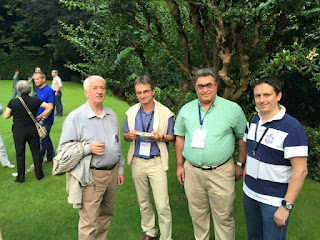
L. Chiariglione, H. Hellwagner, T. Ebrahimi, C. Timmerer (from left to right) during ICME2015. Photo (c) T. Ebrahimi.

Call for Nominations: Editor-In-Chief of ACM TOMM

ACM Transactions on Multimedia Computing, Communications, and Applications (TOMM) The term of the current Editor-in-Chief (EiC) of the ACM Transactions on Multimedia Computing, Communications, and Applications (TOMM) (http://tomm.acm.org/) is coming to an end, and the ACM Publications Board has set up a nominating committee to assist the Board in selecting the next EiC. Nominations, including self-nominations, are invited for a three-year term as TOMM EiC, beginning on 1 January 2016. The EiC appointment may be renewed at most one time. This is an entirely voluntary position, but ACM will provide appropriate administrative support. The EiC is responsible for maintaining the highest editorial quality, for setting technical direction of the papers published in TOMM, and for maintaining a reasonable pipeline of articles for publication. He/she has final say on acceptance of papers, size of the Editorial Board, and appointment of Associate Editors. The EiC is expected to adhere to the commitments expressed in the policy on Rights and Responsibilities in ACM Publishing (http://www.acm.org/publications/policies/RightsResponsibilities). For more information about the role of the EiC, see ACM’s Evaluation Criteria for Editors-in-Chief (http://www.acm.org/publications/policies/evaluation/). Nominations should include a vita along with a brief statement of why the nominee should be considered. Self-nominations are encouraged, and should include a statement of the candidate’s vision for the future development of TOMM. The deadline for submitting nominations is 24 July 2015, although nominations will continue to be accepted until the position is filled. Please send all nominations to the nominating committee chair, Nicu Sebe (sebe@disi.unitn.it). The search committee members are:

  • Nicu Sebe (University of Trento), Chair
  • Rainer Lienhart (University of Augsburg)
  • Alejandro Jaimes (Yahoo!)
  • John R. Smith (IBM)
  • Lynn Wilcox (FXPAL)
  • Wei Tsang Ooi (NUS)
  • Mary Lou Soffa (University of Virginia), ACM Publications Board Liaison

GamingAnywhere: An Open-Source Cloud Gaming Platform

Overview

GamingAnywhere is an open-source clouding gaming platform. In addition to its openness, we design GamingAnywhere for high extensibility, portability, and reconfigurability. GamingAnywhere currently supports Windows and Linux, and can be ported to other OS’s including OS X and Android. Our performance study demonstrates that GamingAnywhere achieves high responsiveness and video quality yet imposes low network traffic [1,2]. The value of GamingAnywhere, however, is from its openness: researchers, service providers, and gamers may customize GamingAnywhere to meet their needs. This is not possible in other closed and proprietary cloud gaming platforms. A demonstration of the GamingAnywhere system. There are four devices in the photo. One game server (left-hand side labtop) and three game clients (an MacBook, an Android phone, and an iPad 2).

Motivation

Computer games have become very popular, e.g., gamers spent 24.75 billion USD on computer games, hardware, and accessories in 2011. Traditionally, computer games are delivered either in boxes or via Internet downloads. Gamers have to install the computer games on physical machines to play them. The installation process becomes extremely tedious because the games are too complicated and the computer hardware and system software are very fragmented. Take Blizzard’s Starcraft II as example, it may take more than an hour to install it on an i5 PC, and another hour to apply the online patches. Furthermore, gamers may find that their computers are not powerful enough to enable all the visual effects yet achieve high frame rates. Hence, gamers have to repeatedly upgrade their computers so as to play the latest computer games. Cloud gaming is a better way to deliver high-quality gaming experience and opens new business opportunities. In a cloud gaming system, computer games run on powerful cloud servers, while gamers interact with the games via networked thin clients. The thin clients are light-weight and can be ported to resource-constrained platforms, such as mobile devices and TV set-top boxes. With cloud gaming, gamers can play the latest computer gamers anywhere and anytime, while the game developers can optimize their games for a specific PC configuration. The huge potential of cloud gaming has been recognized by the game industry: (i) a market report predicts that cloud gaming market will increase 9 times between 2011 and 2017 and (ii) several cloud gaming startups were recently acquired by leading game developers. Although cloud gaming is a promising direction for the game industry, achieving good user experience without excessive hardware investment is a tough problem. This is because gamers are hard to please, as they concurrently demand for high responsiveness and high video quality, but do not want to pay too much. Therefore, service providers have to not only design the systems to meet the gamers’ needs but also take error resiliency, scalability, and resource allocation into considerations. This renders the design and implementation of cloud gaming systems extremely challenging. Indeed, while real-time video streaming seems to be a mature technology at first glance, cloud gaming systems have to execute games, handle user inputs, and perform rendering, capturing, encoding, packetizing, transmitting, decoding, and displaying in real-time, and thus are much more difficult to optimize. We observe that many systems researchers have new ideas to improve cloud gaming experience for gamers and reduce capital expenditure (CAPEX) and operational expenditure (OPEX) for service providers. However, all existing cloud gaming platforms are closed and proprietary, which prevent the researchers from testing their ideas on real cloud gaming systems. Therefore, the new ideas were either only tested using simulators/emulators, or, worse, never evaluated and published. Hence, very few new ideas on cloud gaming (in specific) or highly-interactive distributed systems (more general) have been transferred to the industry. To better bridge the multimedia research community and the game/software industry, we present GamingAnywhere, the first open source cloud gaming testbed in April 2013. We hope GamingAnywhere cloud gather enough attentions, and quickly grow into a community with critical mass, just like Openflow, which shares the same motivation with GamingAnywhere in a different research area.

Design Philosophy

GamingAnywhere aims to provide an open platform for researchers to develop and study real-time multimedia streaming applications in the cloud. The design objectives of GamingAnywhere include:

  1. Extensibility: GamingAnywhere adopts a modularized design. Both platform-dependent components such as audio and video capturing and platform-independent components such as codecs and network protocols can be easily modified or replaced. Developers should be able to follow the programming interfaces of modules in GamingAnywhere to extend the capabilities of the system. It is not limited only to games, and any real-time multimedia streaming application such as live casting can be done using the same system architecture.
  2. Portability: In addition to desktops, mobile devices are now becoming one of the most potential clients of cloud services as wireless networks are getting increasingly more popular. For this reason, we maintain the principle of portability when designing and implementing GamingAnywhere. Currently the server supports Windows and Linux, while the client supports Windows, Linux, and OS X. New platforms can be easily included by replacing platform-dependent components in GamingAnywhere. Besides the easily replaceable modules, the external components leveraged by GamingAnywhere are highly portable as well. This also makes GamingAnywhere easier to be ported to mobile devices.
  3. Configurability: A system researcher may conduct experiments for real-time multimedia streaming applications with diverse system parameters. A large number of built-in audio and video codecs are supported by GamingAnywhere. In addition, GamingAnywhere exports all available configurations to users so that it is possible to try out the best combinations of parameters by simply editing a text-based configuration file and fitting the system into a customized usage scenario.
  4. Openness: GamingAnywhere is publicly available at http://gaminganywhere.org/. Use of GamingAnywhere in academic research is free of charge but researchers and developers should follow the license terms claimed in the binary and source packages.
 
Figure 2: A demonstration of GamingAnywhere running on a Android phone for playing Mario run in an N64 emulator on PC.

How to Start

We offer GamingAnywhere in two types of software packs: all-in-one and binary. The all-in-one pack allows the gamers to recompile GamingAnywhere from scratch, while the binary packs are for the gamers who just want to tryout GamingAnywhere. There are binary packs for Windows and Linux. All the packs are downloadable as zipped archives, and can be installed by simply uncompressing them. GamingAnywhere consists of three binaries: (i) ga-client, which is the thin client, (ii) ga-server-periodic, a server which periodically captures game screens and audio, and (iii) ga-server-event-driven, another server which utilizes code injection techniques to capture game screens and audio on-demand (i.e., whenever an updated game screen is available).   The readers are welcome to visit the website of GamingAnywhere at http://gaminganywhere.org/. Table 1 gives the latest supported OS’s and versions and all the source codes and pre-compiled binary packages can be downloaded from this page. The website provides a variety of document to help users to quickly setup GamingAnywhere server and client on their own computers, including the Quick Start Guide, the Configuration File Guide, and a FAQ document. If you got some questions that are not explained in the documents, we also provide an interactive forum for online discussion.

  Windows Linux MacOSX Android
Server Windows 7+ Supported Supported
Client Windows XP+ Supported Supported 4.1+


Future Perspectives

Cloud gaming is getting increasingly popular, but to turn cloud gaming into an even bigger success, there are still many challenges ahead of us. In [3], we share our views on the most promising research opportunities for providing high-quality and commercially-viable cloud gaming services. These opportunities span over fairly diverse research directions: from very system-oriented game integration to quite human-centric QoE modeling; from cloud related GPU virtualization to content-dependent video codecs. We believe these research opportunities are of great interests to both the research community and the industry for future, better cloud gaming platforms. GamingAnywhere enables several future research directions on cloud gaming and beyond. For example, techniques for cloud management, such as resource allocation and Virtual Machine (VM) migration, are critical to the success of commercial deployments. These cloud management techniques need to be optimized for cloud games, e.g., the VM placement decisions need to be aware of gaming experience [4]. Beyond cloud gaming, as dynamic and adaptive binding between computing devices and displays is increasingly more popular, screencast technologies which enable such binding over wireless networks, also employs real-time video streaming as the core technology. The ACM MMSys’15 paper [5] demonstrates that, GamingAnywhere, though designed for cloud gaming, also serve a good reference implementation and testbed for experimenting different innovations and alternatives for screencast performance improvements. Furthermore, we expect to see future applications, such as mobile smart lens and even telepresence, can make good use of GamingAnywhere as part of core technologies. We are happy to offer GamingAnywhere to the community and more than happy to welcome the community members to join us in the hacking of future, better, real-time streaming systems for the good of the humans.

MPEG Column: 111th MPEG Meeting

— original posts here by Multimedia Communication blogChristian TimmererAAU/bitmovin

The 111th MPEG meeting (note: link includes press release and all publicly available output documents) was held in Geneva, Switzerland showing up some interesting aspects which I’d like to highlight here. Undoubtedly, it was the shortest meeting I’ve ever attended (and my first meeting was #61) as final plenary concluded at 2015/02/20T18:18!

MPEG111 opening plenary

In terms of the requirements (subgroup) it’s worth to mention the call for evidence (CfE) for high-dynamic range (HDR) and wide color gamut (WCG) video coding which comprises a first milestone towards a new video coding format. The purpose of this CfE is to explore whether or not  (a) the coding efficiency and/or (b) the functionality of the HEVC Main 10 and Scalable Main 10 profiles can be significantly improved for HDR and WCG content. In addition to that requirements issues a draft call for evidence on free viewpoint TV. Both documents are publicly available here.

The video subgroup continued discussions related to the future of video coding standardisation and issued a public document requesting contributions on “future video compression technology”. Interesting application requirements come from over-the-top streaming use cases which request HDR and WCG as well as video over cellular networks. Well, at least the former is something to be covered by the CfE mentioned above. Furthermore, features like scalability and perceptual quality is something that should be considered from ground-up and not (only) as an extension. Yes, scalability is something that really helps a lot in OTT streaming starting from easier content management, cache-efficient delivery, and it allows for a more aggressive buffer modelling and, thus, adaptation logic within the client enabling better Quality of Experience (QoE) for the end user. It seems like complexity (at the encoder) is not such much a concern as long as it scales with cloud deployments such as http://www.bitcodin.com/ (e.g., the bitdash demo area shows some neat 4K/8K/HFR DASH demos which have been encoded with bitcodin). Closely related to 8K, there’s a new AVC amendment coming up covering 8K although one can do it already today (see before) but it’s good to have standards support for this. For HEVC, the JCT-3D/VC issued the FDAM4 for 3D Video Extensions and started with PDAM5 for Screen Content Coding Extensions (both documents being publicly available after an editing period of about a month).

And what about audio, the audio subgroup has decided that ISO/IEC DIS 23008-3 3D Audio shall be promoted directly to IS which means that the DIS was already at such a good state that only editorial comments are applied which actually saves a balloting cycle. We have to congratulate the audio subgroup for this remarkable milestone.

Finally, I’d like to discuss a few topics related to DASH which is progressing towards its 3rd edition which will incorporate amendment 2 (Spatial Relationship Description, Generalized URL parameters and other extensions), amendment 3 (Authentication, Access Control and multiple MPDs), and everything else that will be incorporated within this year, like some aspects documented in the technologies under consideration or currently being discussed within the core experiments (CE). Currently, MPEG-DASH conducts 5 core experiments:

  • Server and Network Assisted DASH (SAND)
  • DASH over Full Duplex HTTP-based Protocols (FDH)
  • URI Signing for DASH (CE-USD)
  • SAP-Independent Segment SIgnaling (SISSI)
  • Content aggregation and playback control (CAPCO)

The description of core experiments is publicly available and, compared to the previous meeting, we have a new CE which is about content aggregation and playback control (CAPCO) which “explores solutions for aggregation of DASH content from multiple live and on-demand origin servers, addressing applications such as creating customized on-demand and live programs/channels from multiple origin servers per client, targeted preroll ad insertion in live programs and also limiting playback by client such as no-skip or no fast forward.” This process is quite open and anybody can join by subscribing to the email reflector.

The CE for DASH over Full Duplex HTTP-based Protocols (FDH) is becoming major and basically defines the usage of DASH for push-features of WebSockets and HTTP/2. At this meeting MPEG issues a working draft and also the CE on Server and Network Assisted DASH (SAND) got its own part 5 where it goes to CD but documents are not publicly available. However, I’m pretty sure I can report more on this next time, so stay tuned or feel free to comment here.