Report from ICMR 2017

ACM International Conference on Multimedia Retrieval (ICMR) 2017

ACM ICMR 2017 in “Little Paris”

ACM ICMR is the premier International Conference on Multimedia Retrieval, and from 2011 it “illuminates the state of the arts in multimedia retrieval”. This year, ICMR was in an wonderful location: Bucharest, Romania also known as “Little Paris”. Every year at ICMR I learn something new. And here is what I learnt this year.

ICMR2017

Final Conference Shot at UP Bucharest

UNDERSTANDING THE TANGIBLE: object, scenes, semantic categories – everything we can see.

1) Objects (and YODA) can be easily tracked in videos.

Arnold Smeulders delivered a brilliant keynote on “things” retrieval: given an object in an image, can we find (and retrieve) it in other images, videos, and beyond? Very interesting technique for tracking objects (e.g. Yoda) in videos based on similarity learnt through siamese networks.

Tracking Yoda with Siamese Networks

2) Wearables + computer vision help explore cultural heritage sites.

As showed in his keynote, at MICC University of Florence, Alberto del Bimbo and his amazing team have designed smart audio guides for indoor and outdoor spaces. The system detects, recognises, and describes landmarks and artworks from wearable camera inputs (and GPS coordinates, in case of outdoor spaces).

3) We can finally quantify how much images provide complementary semantics compared to text [BEST MULTIMODAL PAPER AWARD].

For ages, the community has asked how relevant different modalities are for multimedia analysis: this paper (http://dl.acm.org/citation.cfm?id=3078991) finally proposes a solution to quantify information gaps between different modalities.

4) Exploring news corpuses is now very easy: news graphs are easy to navigate and aware of the type of relations between articles.

Remi Bois and his colleagues presented this framework (http://dl.acm.org/citation.cfm?id=3079023), made for professional journalists and the general public, for seamlessly browsing through large-scale news corpus. They built a graph where nodes are articles in a news corpus. The most relevant items to each article are chosen (and linked) based on an adaptive nearest neighbor technique. Each link is then characterised according to the type of relation of the 2 linked nodes.

5) Panorama outdoor images are much easier to localise.

In his beautiful work (https://t.co/3PHCZIrA4N), Ahmet Iscen from Inria developed an algorithm for location prediction from StreetView images, outperforming the state of the art thanks to an intelligent stitching pre-processing step: predicting locations from panoramas (stitched individual views) instead of individual street images improves performances dramatically!

UNDERSTANDING THE INTANGIBLE: artistic aspects, beauty, intent: everything we can perceive

1) Image search intent can be predicted by the way we look.

In his best paper candidate research work (http://dl.acm.org/citation.cfm?id=3078995), Mohammad Soleymani showed that image search intent (seeking information, finding content, or re-finding content) can be predicted from physisological responses (eye gaze) and implicit user interaction (mouse movements).

2) Real-time detection of fake tweets is now possible using user and textual cues.

Another best paper candidate (http://dl.acm.org/citation.cfm?id=3078979), this time from CERTH. The team collected a large dataset of fake/real sample tweets spanning 17 events and built an effective model from misleading content detection from tweet content and user characteristics. A live demo here: http://reveal-mklab.iti.gr/reveal/fake/

3) Music tracks have different functions in our daily lives.

Researchers from TU Delft have developed an algorithm (http://dl.acm.org/citation.cfm?id=3078997) which classifies music tracks according to their purpose in our daily activities: relax, study and workout.

4) By transferring image style we can make images more memorable!

The team at University of Trento built an automatic framework (https://arxiv.org/abs/1704.01745) to improve image memorability. A selector finds the style seeds (i.e. abstract paintings) which are likely to increase memorability of a given image, and after style transfer, the image will be more memorable!

5) Neural networks can help retrieve and discover child book illustrations.

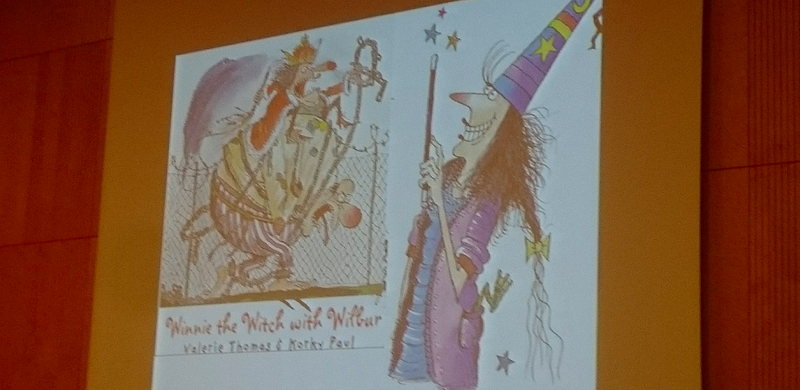
In this amazing work (https://arxiv.org/pdf/1704.03057.pdf), motivated by real children experiences, Pinar and her team from Hacettepe University collected a large dataset of children book illustrations and found that neural networks can predict and transfer style, allowing to make “Winnie the witch”-like many other illustrations.

Winnie the Witch

6) Locals perceive their neighborhood as less interesting, more dangerous and dirtier compared to non-locals.

In this wonderful work (http://www.idiap.ch/~gatica/publications/SantaniRuizGatica-icmr17.pdf), presented by Darshan Santain from IDIAP, researchers asked locals and crowd-workers to look at pictures from various neighborhoods in Guanajuato and rate them according to interestingness, cleanliness, and safety.

THE FUTURE: What’s Next?

1) We will be able to anonymize images of outdoor spaces thanks to Instagram filters, as proposed by this work (http://dl.acm.org/citation.cfm?id=3080543) in the Brave New Idea session.  When an image of an outdoor space is manipulated with appropriate Instagram filters, the location of the image can be masked from vision-based geolocation classifiers.

2) Soon we will be able to embed watermarks in our Deep Neural Network models in order to protect our intellectual property [BEST PAPER AWARD]. This is a disruptive, novel idea, and that is why this work from KDDI Research and Japan National Institute of Informatics won the best paper award. Congratulations!

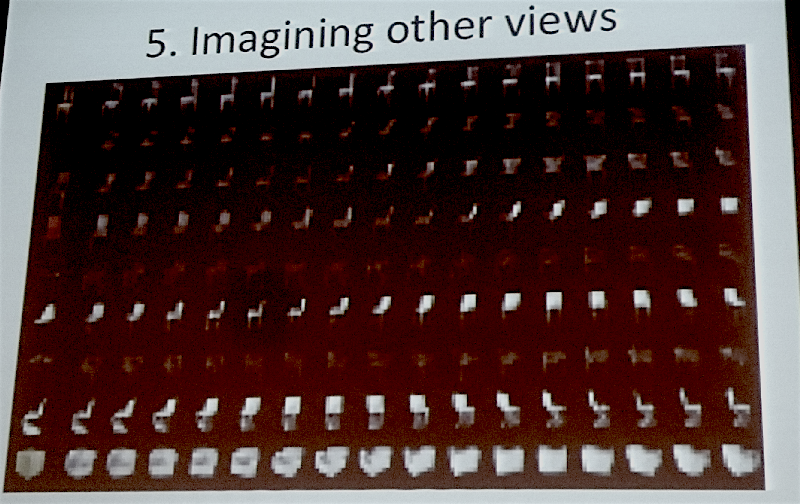
3) Given an image view of an object, we will predict the other side of things (from Smeulders’ keynote). In the pic: predicting the other side of chairs. Beautiful.

Predicting the other side of things

THANKS: To the organisers, to the volunteers, and to all the authors for their beautiful work 🙂

EDITORIAL NOTE: A more extensive report from ICMR 2017 by Miriam is available on Medium

An interview with Prof. Ramesh Jain

Prof. Ramesh Jain in the year 2016.

Prof. Ramesh Jain in 2016.

Please describe your journey into computing from your youth up to the present. What foundational lessons did you learn from this journey? Why you were initially attracted to multimedia?

I am luckier than most people in that I have been able to experience really diverse situations in my life. Computing was just being introduced at Indian Universities when I was a student, so I never had a chance to learn computing in a classroom setting.  I took a few electronics courses as part of my undergraduate education, but nothing even close to computing.  I first used computers during my doctoral studies at the Indian Institute of Technology, Kharagpur, in 1970.  I was instantly fascinated and decided to use this emerging technology in the design of sophisticated control systems.  The information I picked up along the way was driven by my interests and passion.

I grew up in a traditional Indian Ashram, with no facilities for childhood education, so this was not the first time I faced a lack of formal instruction.  My father taught me basic reading, writing, and math skills and then I took a school placement exam.  I started school at the age of nine in fifth grade.

During my doctoral days, two areas fascinated me: computing and cybernetics.  I decided to do my research in digital control systems because it gave me a chance to combine computing and control.  At the time, the use of computing was very basic—digitizing control signals and understanding the effect of digitalization.  After my PhD, I became interested in artificial intelligence and entered AI through pattern recognition.  

In my current research, I am applying cybernetics to health.  Computing has finally matured enough that it can be applied in real control systems that play a critical role in our lives.  And what is more important to our well-being than our health?

The main driver of my career has been realizing that ultimately I am responsible for my own learning. Teachers are important, but ultimately I learn what I find interesting.  The most important attribute in learning is a person’s curiosity and desire to solve problems.  

Something else significantly impacted my thinking in my early research days.  I found that it is fundamental to accept ignorance about a problem and then examine concepts and techniques from multiple perspectives.  One person’s or one research paper’s perspective is just that—an opinion.  By examining multiple perspectives and relating those to your experiences, you can better understand a problem and its solutions.

Another important lesson is that problems or concepts are often independent of the academic and other organisational walls that exist.  Interesting problems always require perspectives, concepts, and technologies from different academic disciplines. Over time, it’s then necessary to create to new disciplines, or as Thomas Kuhn called them new paradigms [Kuhn 62].

In the late 1980s, much of my research was addressing different aspects of computer vision.  I was frustrated by the slow progress in computer vision.  In fact, I coauthored a paper on this topic that became quite controversial [Jain 91].  It was clear that computer vision could be central to computing in the real world, such as in industry, medical imaging, and robotics, but it was unable to solve any real problems.  Progress was slow.  

While working on object recognition, it became increasingly obvious to me that images alone do not contain enough information to solve the vision problem.  Projection of real-world images to a photograph results in a loss of information that can only be recovered by combining information from many other sources, including knowledge in many different forms, metadata, and other signals.  I started thinking that our goal should be to understand the real world using sensors and other sources of knowledge, not just images.  I felt that we were addressing the wrong problem—understanding the physical world using only images.  The real problem is to understand the physical world.  The physical world can only be understood by capturing correlated information.  To me, this is multimedia: understand the physical world using multiple disparate sensors and other sources of information.

This is a very good definition of multimedia. In this context, what do you think is the future of multimedia research in general?

Different aspects of physical world must be captured using different types of sensors. In early days, multimedia concerned itself with the two most dominant human senses:vision and hearing. As the field is advancing, we must deal with every type of sensor that is developed to capture information in different applications. Multimedia must become the area that processes disparate data in context to convert it to information.

Taking into account that you are working with AI for such a long time, what do you think about the current trend of deep learning and how it will develop?

Every field has its trends. Learning is definitely a very important step in AI and has attracted attention from early days. However, it was known that reasoning and search play equally important role in AI. Ultimately problem solving depends on recognizing real world objects and patterns and here learning plays key role. To design successful deep systems, learning needs to be combined with search and reasoning.

Prof. Ramesh Jain at an early stage of his career (1975).

Prof. Ramesh Jain at an early stage of his career (1975).

Please tell us more about your vision and objectives behind your current roles. What do you hope to accomplish, and how will you bring this about?

One thing that is of great interest to every human is their health.  Ironically, technology utilization in healthcare is not as pervasive as in many other fields.  Another intriguing fact about technology and health is that almost all progress in health is due to advances in technology, but barriers to using technology are also the most overwhelming in health.  I experienced the terrifying state of healthcare first hand while going through treatment for gastro-esophageal cancer in 2004.  It became clear to me during my fight with cancer that technology could revolutionize most aspects of treatment—from diagnosis to guidance and operationalization of patient care and engagement—but it was not being used.  During that period, it became clear to me that multimodal data leading to information and knowledge is the key to success in this and many other fields.  That experience changed my thinking and research.

Ancient civilizations observed that health is not the absence of disease; disease is a perturbation of a healthy state.  This wisdom was based on empirical observations and resulted in guidelines for healthy living that includes diet, sleep, and whole-body exercise, such as yoga or tai chi.  Now is the time to develop scientific guidelines based on the latest evolving knowledge and technology to maximize periods of overall health and minimize suffering during diseases in human lives.  It seems possible to raise life expectancy to 100+ years for most people.  I want to cross the 100-year threshold myself and live an active life until my last day.  I am working toward making that happen.

Technology for healthcare is increasingly a popular topic.  Data is at the center of healthcare, and new areas like precision health and wellness are becoming increasingly popular. At the University of California, Irvine (UCI), we’ve created a major effort to bring together researchers from Information and Computer Sciences, Health Sciences, Engineering, Public Health, Nursing, Biology, and others fields who are adopting a novel perspective in an effort to build technology that empowers people. From this perspective, we adopt a cybernetics approach to health.  This work is being done at the UCI’s Institute for Future Health, of which I am the founding director.  

At the Institute for Future Health, currently we are building a community that will do academic research as well as work closely with industry, local communities, hospitals, and start-up companies. We will also collaborate with global researchers and practitioners interested in this approach.  There is significant interest from several institutions in several countries to collaborate and pursue this approach.

This is very interesting and relevant! Do you think that the multimedia community will be open for such a direction or since it is so important and societal relevant would it be good to built a new research community around this idea?

As you said, this is the most important research direction I have been involved in and most challenging. And this is an important direction in itself — this needs to happen using all tech and other resources.

Since I can not wait for any community to be ready to address this, I started building a community to address Future Health. But, I believe that this could be the most relevant application for multimedia technology as well as the techniques from multimedia are very relevant to this area.

Exciting problem because the time is right to address this area.

Do you think that the multimedia community has the right skills to address medical multimedia problems and how could the community be encouraged into that direction?

Multimedia community is better equipped than any other community to deal with diverse types of data. New tools will be required for new challenges, but we already have enough tools and techniques to address many current challenges. To do this, however, the community has to become an open forward looking community going beyond visual information to consider all other modes that are currently ignored under ‘meta data’. All data is data and contributes to information.

Can you profile your current research and its challenges, opportunities, and implications?

I am involved in a research area that is one of the most challenging and that has implications for every human.

The most exciting aspect of health is that it is truly a multimodal data-intensive operation.  As discussed by Norbert Wiener in his book Cybernetics [Wiener 48] about 75 years ago, control and communication processes in machines and animals are similar and are based on information.  Until recently, these principles formed the basis for understanding health, but they can now be used to control health as well.  This is exciting for everybody, and it motivates me to work hard and make something happen. For others, but also for me.

We can discuss some fundamental components of this area from a cybernetics/information perspective:

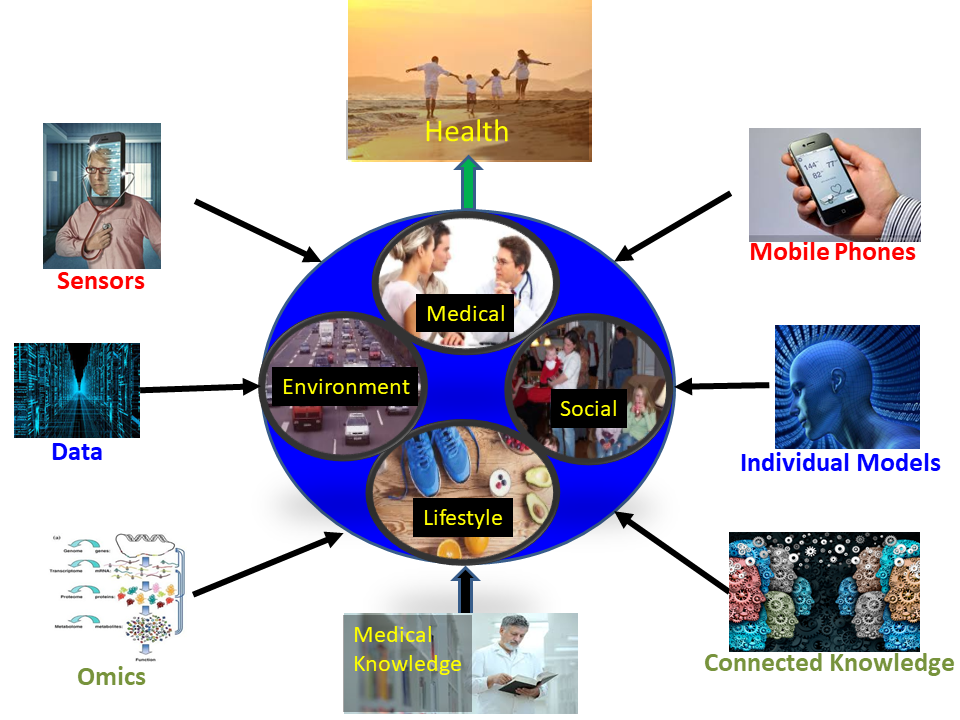
Creating individual health model:  Each person is unique.  Our bodies and lives are determined by two major factors:  genetics and lifestyle.  Until recently, personal genome information was difficult to obtain, and personal lifestyle information was only anecdotally collected.  This century is different. Personal genomic, in fact all Omics, data is becoming easier to get and more precise and informative. And mobile phones, wearables, the Internet of Things (IoTs) around us, and social media are all coming together to quantitatively determine different aspects of our lifestyles as well as many bio-markers.

This requires combining multimodal data from different sources, which is a challenge. By collecting all such lifestyle data, we can start assembling a log of information—a kind of multimodal lifelog on turbo charge—that could be used to build a model of a person using event mining tools.  By combining genomic and lifestyle data, we can form a complete model of a person that contains all detailed health-related information.

Aggregating individual health models to population disease models:  Current disease models rely on limited data from real people.  Until recently, it was not possible to gather all such data. As discussed earlier, the situation is rapidly changing.  Once data is available for individual health models, it could be sliced and diced to formulate disease models for different populations and demographics.  This will be revolutionary.

Correlating health and related knowledge to actions for each individual and for society: Cybernetics underlies most complex engineering real-time systems.  The concept of feedback used generate a correct signal to be applied to a system to take it from the current state to a desired state is essential in all real-time control systems.  Even for the human body, homeostasis uses similar principles.  Can we use this to guide people in their lifestyle choices and medical compliance?  

Navigation systems are a good example of how an old, tedious problem can become extremely easy to use.  Only 15 years ago, we needed maps and a lot of planning to visit new places.  Now, mobile navigation systems can anticipate upcoming actions and even help you correct your mistakes gracefully, in real time.  They can also identify traffic conditions and suggest the best routes.

If technology can do this for navigation in the physical world, can we develop technology to help us select appropriate lifestyle decisions and do so perpetually?  The answer is obviously yes.  By compiling all health and related knowledge, determining your current personal health situation and surrounding environmental situations, and using your past chronicle to log your preferences, it can provide you with suggestions that will make your life not only more healthy but also more enjoyable.

This is our dream at the Institute for Future Health.

Future Health: Perpetual enhancement of health by managing lifestyle and environment.

Future Health: Perpetual enhancement of health by managing lifestyle and environment.

4) How would you describe your top innovative achievements in terms of the problems you were trying to solve, your solutions, and the impact it has today and into the future?

I am lucky to have been active for more than four decades and to have had the opportunity to participate in research and entrepreneurial activities in multiple countries at the best organizations. This gave me a chance to interact with the brightest young people as well as seasoned creative visionaries and researchers.  Thus, it is difficult for me to decide what to list.  I will adopt a chronological approach to answer your question.

Working in H.H. Nagel’s research group in Hamburg Germany, I got involved in developing an approach to motion detection and analysis in 1976.  We wrote the first papers on video analysis that worked with traffic video sequences and detected and analyzed the motion of cars, pedestrians, and other objects.  Our paper at IJCAI 1977 [Jain 77] was remarkable in showing these results at a time when digitizing a picture was a chore lasting minutes and the most powerful computer could not store a full video frame in its memory.  Even today, the first step in many video analysis systems is differencing, as proposed in that work.

Many bright people contributed powerful ideas in computer vision from my groups.  E. North Coleman was possibly the first person to propose Photometric Stereo in 1981 [Coleman].  Paul Besl’s work on segmentation using surface characteristics and 3D object recognition made a significant impact [Besl]. Tom Knoll did some exciting research on feature-indexed hypotheses for object recognition.  But Tom’s major contribution to current computer technology was his development of Photoshop when he was doing his PhD in my research group.  As we all know, Photoshop revolutionized how we view photos. Working with Kurt Skifstad at my first company Imageware, we demonstrated the first version of capturing a 3D shape of a person’s face and reproducing it using a machine in the next room at the Autofact Conference in 1994. I guess that was a primitive version of 3D printing.  At the time, we called it 3D fax.

The idea of designing a content-based organization to build a large database of images was considered crazy in 1990, but it bugged me so much that I started first a project and later a company, Virage, working with several people.  In fact, Bradley Horowitz left his research at MIT to join me in building Virage and later he managed the project that brought Google Photos to its current form.  That process building video databases resulted in my realizing that photos and videos are a lot more than just intensity values.  And that realization lead me to champion the idea that information about the physical world can be recovered more effectively and efficiently by combining correlated, but incomplete, information from several sources, including metadata.  This was the thinking that encouraged me to start building the multimedia community.

Since computing and camera technology had advanced enough by 1994, my research group at the University of California, San Diego (UCSD), particularly Koji Wakimoto[Jain 95] and then Arun Katkere and Saeed Moezzi [Moezzi 96] helped in developing initially Multiple Perspective Interactive Video and later Immersive video to realize compelling telepresence.  That research area in various forms attracted people from the movie industry as well as people interested in different art forms and collaborative spaces.  By licensing our patents from UCSD, we started a company Praja to bring immersive video technology to sports.  I left academia to be the CEO of Praja.

While developing technology for indexing sporting events, it became obvious that events are as important as objects, if not more, when indexing multimedia data.  Information about events comes from separate sources, and events combine different dimensions that play a key role in our understanding of the world.  This realization resulted in Westermann and I working on a general computational model for events.  Later we realized that by aggregating events over space and time, we could detect situations.  Vivek Singh and Mingyan Gao helped prototype an EventShop platform [Singh 2010], which was later converted to an open source platform under the leadership of Siripen Pongpaichet.

One of the most fundamental problems in society is connecting people’s needs to appropriate resources effectively, efficiently, and promptly in a given situation.  To understand people’s needs, it is essential to build objective models that could be used to recommend correct resources in given situations.  Laleh Jalali started building an event-mining framework that could be used to build an objective self model using the different types of data streams related to people that have now become easily available [Jalali 2015].  

All this work is leading to a framework that is behind my current thinking related to health intelligence. In health intelligence, our goal is to perpetually measure a person’s activities, lifestyle, environment, and bio-markers to understand his/her current state as well as continuously build his/her model. Using that model, current state, and medical knowledge, it is possible to provide perpetual guidance to help people take the right action in a given situation.

Over your distinguished career, what are the top lessons you want to share with the audience?

I have been lucky to get a chance to work on several fun projects.  More importantly, I have worked closely on an equal number of successful and not so successful projects. I consider a project successful if it accomplishes its goal and the people working on the project enjoy it.  Although each project is unique, I’ve noticed that some common themes make for a project successful.

Passion for the Project:  Time and again, I’ve seen that passion for the project makes a huge difference. When people are passionate, they don’t consider it work and will literally do whatever is required to make it successful.  In my own case, I find that the ideas that I find compelling, both in terms of their goals and implications, are the ones that motivate me to do my best.  I am focused, driven, and willing to work hard.  I learned long ago to work only on problems that I find important and compelling.  Some ideas are just not for me.  Otherwise, it is better for the project and for me if I dissociate with it at the first opportunity to do so.

Open Mind:  Departmental or similar boundaries in both academia and industry severely restrict how a problem is addressed.  Solving a problem should be the goal, not using the resources or technology of a specific department.  In academia, I often hear things like “this is not a multimedia problem” or “this is database problem.”  Usually, the goal of a project is to solve a problem, so we should use the best technique or resource available to solve the problem.

Most of the boundaries for academic disciplines are artificial, and because they keep changing, the departments based on any specific factor will likely also change over time.  By addressing challenging problems using appropriate technology and resources, we push boundaries and either expand older boundaries or create new disciplines.

Another manifestation of an open mind is the ability to see the same problem from multiple perspectives.  This is not easy—we all have our biases.  The best thing to do is to form a group of researchers from diverse cultural and disciplinary backgrounds.  Diversity naturally results in diverse perspectives.

Persistence:  Good research is usually the result of sustained efforts to understand and solve a challenge.  Many intrinsic and extrinsic issues must be handled during a successful research journey. By definition, an important research challenge requires navigating unchartered territories.  Many people get frustrated in an unmapped area and when there is no easy way to evaluate progress.  In my experience, even some of my brightest students are comfortable only when they can say I am better than X approach by N%.  In most novel problems, there is no X and no metrics to judge performance. Only a few people are comfortable in such situations where incremental progress may not be computable.  We require both kinds of people: those who can improve given approaches and those who can pioneer new areas.  The second group requires people that can be confident about their research directions without having concrete external evaluation measures.  The ability to work confidently without external affirmation is essential in important deep challenges.

In the current culture, a researcher’s persistence is also tested by “publish or perish” oriented colleagues who determine the quality of research by acceptance rates at the so-called top conferences. When your papers are rejected, you are dejected and sometimes feel that you are doing the wrong research.  Not always true.  The best thing about these conferences is that they test your self-confidence.

We have all read the stories about the research that ultimately resulted in the WWW and the paper on PageRank that later became the foundation of Google search.  Both were initially rejected. Yet, the authors were confident in their work so they persevered.  When one of my papers gets rejected (which is more often the case than with my much inferior papers), much of the time the reviewers are looking for incremental work—the trendy topics—and don’t have time, openness, and energy to think beyond what they and their friends have been doing. I read and analyze reviewers’ comments to see whether they understood my work and then decide whether to take them seriously or ignore them.  In other words, you have to be confident of your own ideas and review the reviews to decide your next steps.

I noticed that one of your favourite quotes is “Imagination is more important than knowledge.” In this regard, do you think there is enough “imagination” in today’s research, or are researchers mainly driven/constrained by grants, metrics, and trends? 

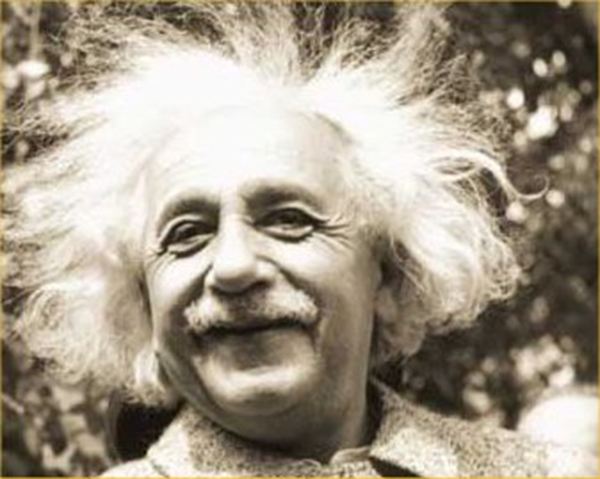
The complete quote by Albert Einstein is “Imagination is more important than knowledge. For knowledge is limited, whereas imagination embraces the entire world, stimulating progress, giving birth to evolution.”  So knowledge begins with imagination. Imagination is the beginning of a hypothesis. When the hypothesis is validated, that results in knowledge.

People often seek short-term rewards.  It is easier to follow trends and established paradigms than to go against them or create new paradigms.  This is nothing new; it has always happened. At one time scientists, like Galileo Galilei, were persecuted for opposing the established beliefs. Today, I only have to worry about my papers and grant proposals getting rejected.  The most engaged researchers are driven by their passion and the long-term rewards that may (or may not) come with it.

Albert Einstein (Source: Planet Science)

Albert Einstein (Source: Planet Science)

References:

  1. Kuhn, T. S. The Structure of Scientific Revolutions. Chicago: University of Chicago Press, 1962. ISBN 0-226-45808-3
  2. R. Jain and T. O. Binford, “Ignorance, Myopia, and Naiveté in Computer    Vision Systems,” CVGIP, Image Understanding, 53(1), 112-117. 1991.   
  3. Norbert Wiener, Cybernetics: Or Control and Communication in the Animal and the Machine. Paris, (Hermann & Cie) & Camb. Mass. (MIT Press) ISBN 978-0-262-73009-9; 2nd revised ed. 1961.
  4. R. Jain, D. Militzer and H. Nagel, “Separating a Stationary Form from Nonstationary Scene Components in a Sequence of Real World TV Frames,” Proceedings of IJCAI 77, Cambridge, Massachusetts, 612-618. 1977.
  5. E. N. Coleman and R. Jain, “Shape from Shading for Surfaces with Texture    and Specularity,” Proceedings of IJCAI. 1981.  
  6. P. Besl, and R. Jain, “Invariant Surface Characteristics for 3-D Object     Recognition in Depth Maps,” Computer Vision, Graphics and Image Processing, 33, 33-80. 1986.
  7. R. Jain and K. Wakimoto, “Multiple Perspective Interactive Video,” Proceedings of IEEE Conference on Multimedia Systems. May 1995.
  8. S. Moezzi, Arun Katkere, D. Kuramura, and R. Jain, “Reality Modeling    and Visualization from Multiple Video Sequences,” IEEE Computer     Graphics and Applications, 58-63. November 1996.
  9. Vivek Singh, Mingyan Gao, and Ramesh Jain,”Social Pixels: Genesis and evaluation”, Proc. ACM Multimedia, 2010.
  10. Laleh Jalali, Ramesh Jain: Bringing Deep Causality to Multimedia Data Streams. ACM Multimedia 2015: 221-230

Bios


About Prof. Ramesh Jain: 

Ramesh Jain is an entrepreneur, researcher, and educator. He is a Donald Bren Professor in Information & Computer Sciences at University of California, Irvine.  Earlier he has been at Georgia Tech, University of California, San Diego, University of Michigan, and some other universities in many countries.  He was educated at Nagpur University (B.E.) and Indian Institute of Technology, Kharagpur (Ph.D.) in India.  His current research is in Social Life Networks including EventShop and Objective Self, and Health Intelligence.  He has been an active member of professional community serving in various positions and contributing more than 400 research papers and coauthoring several books including text books in Machine Vision and Multimedia Computing.  He is a Fellow of AAAI, AAAS, ACM, IEEE, IAPR, and SPIE.

Ramesh co-founded several companies, managed them in initial stages, and then turned them over to professional management.  He also advised major companies in multimedia and search technology.  He still enjoys the thrill of start-up environment.

His research and entrepreneurial interests have been in computer vision, AI, multimedia, and social computing. He is the founding director of Institute for Future Health at UCI.

Michael Alexander Riegler: 

Michael is a scientific researcher at Simula Research Laboratory. He received his Master’s degree from Klagenfurt University with distinction and finished his PhD at the University of Oslo in two and a half years. His PhD thesis topic was efficient processing of medical multimedia workloads.

His research interests are medical multimedia data analysis and understanding, image processing, image retrieval, parallel processing, gamification and serious games, crowdsourcing, social computing and user intentions. Furthermore, he is involved in several initiatives like the MediaEval Benchmarking initiative for Multimedia Evaluation, which runs this year the Medico task (automatic analysis of colonoscopy videos)footnote{http://www.multimediaeval.org/mediaeval2017/medico/}.

Since 1997 Alan Smeaton has been a Professor of Computing at Dublin City University. He joined DCU (then NIHED) in 1987 having completed his PhD in UCD under the supervision of Prof. Keith van Rijsbergen. He also completed an M.Sc. and  B.Sc. at UCD.

In 1994 Alan was chair of the ACM SIGIR Conference which he hosted in Dublin, program co-chair of  SIGIR in Toronto in 2003 and general chair of the Conference on Image and Video Retrieval (CIVR) which he hosted in Dublin in 2004.  In 2005 he was program co-chair of the International Conference on Multimedia and Expo in Amsterdam, in 2009 he was program co-chair of ACM MultiMedia Modeling conference in Sophia Antipolis, France and in 2010 co-chair of the program for CLEF-2010 in Padova, Italy.

Alan has published over 600 book chapters, journal and refereed conference papers as well as dozens of other presentations, seminars and posters and he has a Google Scholar h-index of 58. He was an Associate Editor of the ACM Transactions on Information Systems for 8 years, and has been a member of the editorial board of four other journals. He is presently a member of the Editorial Board of Information Processing and Management.

Alan has graduated 50 research students since 1991, the vast majority at PhD level. He has acted as examiner for PhD theses in other Universities on more than 30 occasions, and has assisted the European Commission since 1990 in dozens of advisory and consultative roles, both as an evaluator or reviewer of project proposals and as a reviewer of ongoing projects. He has also carried out project proposal reviews for more than 20 different research councils and funding agencies in the last 10 years.

More recently Alan is a Founding Director of the Insight Centre for Data Analytics, Dublin City University (2013-2019), the largest single non-capital research award given by a research funding agency in Ireland. He is Chair of ACM SIGMM (Special Interest Group in Multimedia), (2017-) and a member of the Scientific Committee of COST (European Cooperation in Science and Technology), an EU funding program with a budget of €300m in Horizon 2020.

In 2001 he was joint (and founding) coordinator of TRECVid – the largest worldwide benchmarking evaluation on content-based analysis of multimedia (digital video) which runs annually since then and way back in 1991 he was a member of the founding steering group of TREC, the annual Text Retrieval Evaluation Conference carried out at the US National Institute for Standards and Technology, US, 1991-1996.

Alan was awarded the Royal Irish Academy Gold Medal for Engineering Sciences in 2015. Awarded once every 3 years, the RIA Gold Medals were established in 2005 “to acclaim Ireland’s foremost thinkers in the humanities, social sciences, physical & mathematical sciences, life sciences, engineering sciences and the environment & geosciences”.

He was jointly awarded the Niwa-Takayanagi Prize by the Institute of Image Information and Television Engineers, Japan for outstanding achievements in the field of video information media and in promoting basic research in this field.  He is a member of the Irish Research Council (2012-2015, 2015-2018), an appointment by the Irish Government and winner of Tony Kent Strix award (2011) from the UK e-Information Society for “sustained contributions to the field of … indexing and retrieval of image, audio and video data”.

Alan is a member of the ACM, a Fellow of the IEEE and is a Fellow of the Irish Computer Society.

Michael Alexander Riegler:  

Michael is a scientific researcher at Simula Research Laboratory. He received his Master’s degree from Klagenfurt University with distinction and finished his PhD at the University of Oslo in two and a half years. His PhD thesis topic was efficient processing of medical multimedia workloads.

His research interests are medical multimedia data analysis and understanding, image processing, image retrieval, parallel processing, crowdsourcing, social computing and user intent. Furthermore, he is involved in several initiatives like the MediaEval Benchmarking initiative for Multimedia Evaluation, which runs this year the Medico task (automatic analysis of colonoscopy videos)footnote{http://www.multimediaeval.org/mediaeval2017/medico/}.

Awarding the Best Social Media Reporters

The SIGMM Records team has adopted a new strategy to encourage the publication of information, and thus increase the chances to reach the community, increase knowledge and foster interaction. It consists of awarding the best Social Media reporters for each SIGMM conference, being the award a free registration to one of the SIGMM conference within a period of one year. All SIGMM members are welcome to participate and contribute, and are candidates to receive the award.

The Social Media Editors will issue a new open Call for Reports (CfR) via the Social Media channels every time a new SIGMM conference takes place, so the community can remember or be aware of this initiative, as well as can refresh its requirements and criteria.

The CfR will encourage activity on Social Media channels, posting information and contents related to the SIGMM conferences, with the proper hashtags (see our Recommendations). The reporters will be encouraged to mainly use Twitter, but other channels and innovative forms or trends of dissemination will be very welcome!

The Social Media Editors will be the jury for deciding the best reports (i.e., collection of posts) on Social Media channels, and thus will not qualify for this award. The awarded reporters will be additionally asked to provide a post-summary of the conference. The number of awards for each SIGMM conference is indicated in the table below. The awarded reporter will get a free registration to one of the SIGMM conferences (of his/her choice) within a period of one year.

Read more

Posting about SIGMM on Social Media

In Social Media, a common and effective mechanism to associate the publications about a specific thread, topic or event is to use hashtags. Therefore, the Social Media Editors believe in the convenience of recommending standards or basic rules for the creation and usage of the hashtags to be included in the publications related to the SIGMM conferences.

In this context, a common doubt is whether to include the ACM word and the year in the hashtags for conferences. Regarding the year, our recommendation is to not include it, as the date is available for the publications themselves and, this way, a single hashtag can be used to gather all the publications for all the editions of a specific SIGMM conference. Regarding the ACM word, our recommendation is to include it in the hashtag only if the conference acronym contains less than four letters (i.e., #acmmm, #acmtvx) and otherwise not (i.e., #mmsys, #icmr). Although consistency is important, not including ACM for MM (and for TVX) is clearly not a good identifier, and including it for MMSYS and ICMR results in a too long hashtag. Indeed, the #acmmmsys and #acmicmr hashtags have not been used before, contrarily to the wide use of #acmmm (and also of #acmtvx). Therefore, our recommendations for the usage and inclusion of hashtags can be summarized as:

Conference Hashtag

Include #ACM and #SIGMM?

MM #acmmm Yes
MMSYS #mmsys Yes
ICMR #icmr Yes


Report from MMM 2017

MMM 2017 — 23rd International Conference on MultiMedia Modeling

MMM is a leading international conference for researchers and industry practitioners for sharing new ideas, original research results and practical development experiences from all MMM related areas. The 23rd edition of MMM took place on January 4-6 of 2017, on the modern campus of Reykjavik University. In this short report, we outline the major aspects of the conference, including: technical program; best paper session; video browser showdown; demonstrations; keynotes; special sessions; and social events. We end by acknowledging the contributions of the many excellent colleagues who helped us organize the conference. For more details, please refer to the MMM 2017 web site.

Technical Program

The MMM conference calls for research papers reporting original investigation results and demonstrations in all areas related to multimedia modeling technologies and applications. Special sessions were also held that focused on addressing new challenges for the multimedia community.

This year, 149 regular full paper submissions were received, of which 36 were accepted for oral presentation and 33 for poster presentation, for a 46% acceptance ratio. Overall, MMM received 198 submissions for all tracks, and accepted 107 for oral and poster presentation, for a total of 54% acceptance rate. For more details, please refer to the table below.

MMM2017 Submissions and Acceptance Rates

MMM2017 Submissions and Acceptance Rates

Best Paper Session

Four best paper candidates were selected for the best paper session, which was a plenary session at the start of the conference.

The best paper, by unanimous decision, was “On the Exploration of Convolutional Fusion Networks for Visual Recognition” by Yu Liu, Yanming Guo, and Michael S. Lew. In this paper, the authors propose an efficient multi-scale fusion architecture, called convolutional fusion networks (CFN), which can generate the side branches from multi-scale intermediate layers while consuming few parameters.

Phoebe Chen, Laurent Amsaleg and Shin’ichi Satoh (left) present the Best Paper Award to Yu Liu and Yanming Guo (right).

Phoebe Chen, Laurent Amsaleg and Shin’ichi Satoh (left) present the Best Paper Award to Yu Liu and Yanming Guo (right).

The best student paper, partially chosen due to the excellent presentation of the work, was “Cross-modal Recipe Retrieval: How to Cook This Dish?” by Jingjing Chen, Lei Pang, and Chong-Wah Ngo. In this work, the problem of sharing food pictures from the viewpoint of cross-modality analysis was explored. Given a large number of image and recipe pairs acquired from the Internet, a joint space is learnt to locally capture the ingredient correspondence from images and recipes.

Phoebe Chen, Laurent Amsaleg and Shin’ichi Satoh (left) present the Best Student Paper Award to Jingjing Chen and Chong-Wah Ngo (right).

Phoebe Chen, Shin’ichi Satoh and Laurent Amsaleg (left) present the Best Student Paper Award to Jingjing Chen and Chong-Wah Ngo (right).

The two runners-up were “Spatio-temporal VLAD Encoding for Human Action Recognition in Videos” by Ionut Cosmin Duta, Bogdan Ionescu, Kiyoharu Aizawa, and Nicu Sebe, and “A Framework of Privacy-Preserving Image Recognition for Image-Based Information Services” by Kojiro Fujii, Kazuaki Nakamura, Naoko Nitta, and Noboru Babaguchi.

Video Browser Showdown

The Video Browser Showdown (VBS) is an annual live video search competition, which has been organized as a special session at MMM conferences since 2012. In VBS, researchers evaluate and demonstrate the efficiency of their exploratory video retrieval tools on a shared data set in front of the audience. The participating teams start with a short presentation of their system and then perform several video retrieval tasks with a moderately large video collection (about 600 hours of video content). This year, seven teams registered for VBS, although one team could not compete for personal and technical reasons. For the first time in 2017, live judging was included, in which a panel of expert judges made decisions in real-time about the accuracy of the submissions for ⅓ of the tasks.

Teams and spectators in the Video Browser Showdown.

Teams and spectators in the Video Browser Showdown.

On the social side, two changes were also made from previous conferences. First, VBS was held in a plenary session, to avoid conflicts with other schedule items. Second, the conference reception was held at VBS, which meant that attendees had extra incentives to attend VBS, namely food and drink. And third, Alan Smeaton served as “color commentator” during the competition, interviewing the organizers and participants, and helping explain to the audience what was going on. All of these changes worked well, and contributed to a very well attended VBS session.

The winners of VBS 2017, after a very even and exciting competition, were Luca Rossetto, Ivan Giangreco, Claudiu Tanase, Heiko Schuldt, Stephane Dupont and Omar Seddati, with their IMOTION system.

The winners of VBS 2017, after a very even and exciting competition, were Luca Rossetto, Ivan Giangreco, Claudiu Tanase, Heiko Schuldt, Stephane Dupont and Omar Seddati, with their IMOTION system.

Demonstrations

Five demonstrations were presented at MMM. As in previous years, the best demonstration was selected using both a popular vote and a selection committee. And, as in previous years, both methods produced the same winner, which was: “DeepStyleCam: A Real-time Style Transfer App on iOS” by Ryosuke Tanno, Shin Matsuo, Wataru Shimoda, and Keiji Yanai.

The winners of the Best Demonstration competition hard at work presenting their system.

The winners of the Best Demonstration competition hard at work presenting their system.

Keynotes

The first keynote, held in the first session of the conference, was “Multimedia Analytics: From Data to Insight” by Marcel Worring, University of Amsterdam, Netherlands. He reported on a novel multimedia analytics model based on an extensive survey of over eight hundred papers. In the analytics model, the need for semantic navigation of the collection is emphasized and multimedia analytics tasks are placed on an exploration-search axis. Categorization is then proposed as a suitable umbrella task for realizing the exploration-search axis in the model. In the end, he considered the scalability of the model to collections of 100 million images, moving towards methods which truly support interactive insight gain in huge collections.

Björn Þór Jónsson introduces the first keynote speaker, Marcel Worring (right).

Björn Þór Jónsson introduces the first keynote speaker, Marcel Worring (right).

The second keynote, held in the last session of the conference, was “Creating Future Values in Information Access Research through NTCIR” by Noriko Kando, National Institute of Informatics, Japan. She reported on NTCIR (NII Testbeds and Community for Information access Research), which is a series of evaluation workshops designed to enhance the research in information access technologies, such as information retrieval, question answering, and summarization using East-Asian languages, by providing infrastructures for research and evaluation. Prof Kando provided motivations for the participation in such benchmarking activities and she highlighted the range of scientific tasks and challenges that have been explored at NTCIR over the past twenty years. She ended with ideas for the future direction of NTCIR.

key2

Noriko Kando presents the second MMM keynote.

Special Sessions

During the conference, four special sessions were held. Special sessions are mini-venues, each focusing on one state-of-the-art research direction within the multimedia field. The sessions are proposed and chaired by international researchers, who also manage the review process, in coordination with the Program Committee Chairs. This year’s sessions were:
– “Social Media Retrieval and Recommendation” organized by Liqiang Nie, Yan Yan, and Benoit Huet;
– “Modeling Multimedia Behaviors” organized by Peng Wang, Frank Hopfgartner, and Liang Bai;
– “Multimedia Computing for Intelligent Life” organized by Zhineng Chen, Wei Zhang, Ting Yao, Kai-Lung Hua, and Wen-Huang Cheng; and
– “Multimedia and Multimodal Interaction for Health and Basic Care Applications” organized by Stefanos Vrochidis, Leo Wanner, Elisabeth André, Klaus Schoeffmann.

Social Events

This year, there were two main social events at MMM 2017: a welcome reception at the Video Browser Showdown, as discussed above, and the conference banquet. Optional tours then allowed participants to further enjoy their stay on the unique and beautiful island.

The conference banquet was held in two parts. First, we visited the exotic Blue Lagoon, which is widely recognised as one of the modern wonders of the world and one of the most popular tourist destinations in Iceland. MMM participants had the option of bathing for two hours in this extraordinary spa, and applying the healing silica mud to their skin, before heading back for the banquet in Reykjavík.

The banquet itself was then held at the Harpa Reykjavik Concert Hall and Conference Centre in downtown Reykjavík. Harpa is one of Reykjavik‘s most recent, yet greatest and most distinguished landmarks. It is a cultural and social centre in the heart of the city and features stunning views of the surrounding mountains and the North Atlantic Ocean.

Harpa, the venue of the conference banquet.

Harpa, the venue of the conference banquet.

During the banquet, Steering Committee Chair Phoebe Chen gave a historical overview of the MMM conferences and announced the venues for MMM 2018 (Bangkok, Thailand) and MMM 2019 (Thessaloniki, Greece), before awards for the best contributions were presented. Finally, participants were entertained by a small choir, and were even asked to participate in singing a traditional Icelandic folk song.

MMM 2018 will be held at Chulalongkorn University in Bangkok, Thailand.  See http://mmm2018.chula.ac.th/.

MMM 2018 will be held at Chulalongkorn University in Bangkok, Thailand. See http://mmm2018.chula.ac.th/.

Acknowledgements

There are many people who deserve appreciation for their invaluable contributions to MMM 2017. First and foremost, we would like to thank our Program Committee Chairs, Laurent Amsaleg and Shin’ichi Satoh, who did excellent work in organizing the review process and helping us with the organization of the conference; indeed they are still hard at work with an MTAP special issue for selected papers from the conference. The Proceedings Chair, Gylfi Þór Guðmundsson, and Local Organization Chair, Marta Kristín Lárusdóttir, were also tirelessly involved in the conference organization and deserve much gratitude.

Other conference officers contributed to the organization and deserve thanks: Frank Hopfgartner and Esra Acar (demonstration chairs); Klaus Schöffmann, Werner Bailer and Jakub Lokoč (VBS Chairs); Yantao Zhang and Tao Mei (Sponsorship Chairs); all the Special Session Chairs listed above; the 150 strong Program Committee, who did an excellent job with the reviews; and the MMM Steering Committee, for entrusting us with the organization of MMM 2017.

Finally, we would like to thank our student volunteers (Atli Freyr Einarsson, Bjarni Kristján Leifsson, Björgvin Birkir Björgvinsson, Caroline Butschek, Freysteinn Alfreðsson, Hanna Ragnarsdóttir, Harpa Guðjónsdóttir), our hosts at Reykjavík University (in particular Arnar Egilsson, Aðalsteinn Hjálmarsson, Jón Ingi Hjálmarsson and Þórunn Hilda Jónasdóttir), the CP Reykjavik conference service, and all others who helped make the conference a success.

JPEG Column: 75th JPEG Meeting in Sydney, Australia

The 75th JPEG meeting was held at National Standards Australia in Sydney, Australia, from 26 to 31 March. Multiples activities have been ensued, pursuing the development of new standards that meet the current requirements and challenges on imaging technology. JPEG is continuously trying to provide new reliable solutions for different image applications. The 75th JPEG meeting featured mainly the following highlights:

  • JPEG issues a Call for Proposals on Privacy & Security;Image may contain: 3 people, people sitting, screen and indoor
  • New draft Call for Proposal for a Part 15 of JPEG 2000 standard on High Throughput coding;
  • JPEG Pleno defines methodologies for proposals evaluation;
  • A test model for the upcoming JPEG XS standard was created;
  • A new standardisation effort on Next generation Image Formats was initiated.

In the following an overview of the main JPEG activities at the 75th meeting is given.

JPEG Privacy & Security – JPEG Privacy & Security is a work item (ISO/IEC 19566-4) aiming at developing a standard for providing technical solutions which can ensure privacy, maintaining data integrity, and protecting intellectual property rights (IPR). JPEG Privacy & Security is exploring ways on how to design and implement the necessary features without significantly impacting coding performance while ensuring scalability, interoperability, and forward & backward compatibility with current JPEG standard frameworks.
Since the JPEG committee intends to interact closely with actors in this domain, public workshops on JPEG Privacy & Security were organised in previous JPEG meetings. The first workshop was organized on October 13, 2015 during the JPEG meeting in Brussels, Belgium. The second workshop was organized on February 23, 2016 during the JPEG meeting in La Jolla, CA, USA. Following the great success of these workshops, a third and final workshop was organized on October 18, 2016 during the JPEG meeting in Chengdu, China. These workshops targeted on understanding industry, user, and policy needs in terms of technology and supported functionalities. The proceedings of these workshops are published on the Privacy and Security page of JPEG website at www.jpeg.org under Systems section.
The JPEG Committee released a Call for Proposals that invites contributions on adding new capabilities for protection and authenticity features for the JPEG family of standards. Interested parties and content providers are encouraged to participate in this standardization activity and submit proposals. The deadline for an expression of interest and submissions of proposals has been set to October 6th, 2017, as detailed in the Call for Proposals. The Call for Proposals on JPEG Privacy & Security is publicly available on the JPEG website, https://jpeg.org/jpegsystems/privacy_security.html.

High Throughput JPEG 2000 – The JPEG committee is working towards the creation of a new Part 15 to the JPEG 2000 suite of standards, known as High Throughput JPEG 2000 (HTJ2K). The goal of this project is to identify and standardize an alternate block coding algorithm that can be used as a drop-in replacement for the algorithm defined in JPEG 2000 Part-1. Based on existing evidence, it is believed that large increases in encoding and decoding throughput (e.g., 10X or beyond) should be possible on modern software platforms, subject to small sacrifices in coding efficiency. An important focus of this activity is inter-operability with existing systems and content repositories. In order to ensure this, the alternate block coding algorithm that will be the subject of this new Part of the standard should support mathematically lossless transcoding between HTJ2K and JPEG 2000 Part-1 codestreams at the code-block level. A draft Call for Proposals (CfP) on HTJ2K has been issued for public comment, and is available on JPEG web-site.

JPEG Pleno – The responses to the JPEG Pleno Call for Proposals on Light Field Coding will be evaluated at the July JPEG meeting in Torino. During JPEG 75th meetings has been defined the quality assessment procedure for this highly challenging type of large volume data. In addition to light fields, JPEG Pleno is also addressing point cloud and holographic data. Currently, the committee is undertaking in-depth studies to prepare standardization efforts on coding technologies for these image data types, encompassing the collection of use cases and requirements, but also investigations towards accurate and appropriate quality assessment procedures for associated representation and coding technologies. JPEG committee is probing for input from the involved industrial and academic communities.

JPEG XS – This project aims at the standardization of a visually lossless low-latency lightweight compression scheme that can be used as a mezzanine codec for the broadcast industry and Pro-AV markets. Targeted use cases are professional video links, IP transport, Ethernet transport, real-time video storage, video memory buffers, and omnidirectional video capture and rendering. After a Call for Proposal and the assessment of the submitted technologies, a test model for the upcoming JPEG XS standard was created and results of core experiments have been reviewed during the 75th JPEG meeting in Sydney. More core experiments are on their way to further improve the final standard: JPEG committee therefore invites interested parties – in particular coding experts, codec providers, system integrators and potential users of the foreseen solutions – to contribute to the further specification process.

Next generation Image Formats – The JPEG Committee is exploring a new activity, which aims to develop an image compression format that demonstrates higher compression efficiency at equivalent subjective quality of currently available formats, and that supports features for both low-end and high-end use cases.  On the low end, the new format addresses image-rich user interfaces and web pages over bandwidth-constrained connections. On the high end, it targets efficient compression for high-quality images, including high bit depth, wide color gamut and high dynamic range imagery.

Final Quote

“JPEG is committed to accommodate reliable and flexible security tools for JPEG file formats without compromising legacy usage of our standards said Prof. Touradj Ebrahimi, the Convener of the JPEG committee.

About JPEG

JPEG-signatureThe Joint Photographic Experts Group (JPEG) is a Working Group of ISO/IEC, the International Organisation for Standardization / International Electrotechnical Commission, (ISO/IEC JTC 1/SC 29/WG 1) and of the Interna
tional Telecommunication Union (ITU-T SG16), responsible for the popular JBIG, JPEG, JPEG 2000, JPEG XR, JPSearch and more recently, the JPEG XT, JPEG XS, JPEG Systems and JPEG Pleno families of imaging standards.

The JPEG group meets nominally three times a year, in Europe, North America and Asia. The latest 75th    meeting was held on March 26-31, 2017, in Sydney, Australia. The next (76th) JPEG Meeting will be held on July 15-21, 2017, in Torino, Italy.

More information about JPEG and its work is available at www.jpeg.org or by contacting Antonio Pinheiro (pinheiro@ubi.pt) or Frederik Temmermans (ftemmerm@etrovub.be) of the JPEG Communication Subgroup.

If you would like to stay posted on JPEG activities, please subscribe to the jpeg-news mailing list on https://listserv.uni-stuttgart.de/mailman/listinfo/jpeg-news.  Moreover, you can follow JPEG twitter account on http://twitter.com/WG1JPEG.

Future JPEG meetings are planned as follows:

  • No. 76, Torino, IT, 17 – 21 July, 2017
  • No. 77, Macau, CN, 23 – 27 October 2017

MPEG Column: 118th MPEG Meeting

The original blog post can be found at the Bitmovin Techblog and has been updated here to focus on and highlight research aspects.

The entire MPEG press release can be found here comprising the following topics:

  • Coded Representation of Immersive Media (MPEG-I): new work item approved and call for test data issued
  • Common Media Application Format (CMAF): FDIS approved
  • Beyond High Efficiency Video Coding (HEVC): call for evidence for “beyond HEVC” and verification tests for screen content coding extensions of HEVC

Coded Representation of Immersive Media (MPEG-I)

MPEG started to work on the new work item referred to as ISO/IEC 23090 with the “nickname” MPEG-I targeting future immersive applications. The goal of this new standard is to enable various forms of audio-visual immersion including panoramic video with 2D and 3D audio with various degrees of true 3D visual perception. It currently comprises five parts: (pt. 1) a technical report describing the scope of this new standard and a set of use cases and applications; (pt. 2) an application format for omnidirectional media (aka OMAF) to address the urgent need of the industry for a standard is this area; (pt. 3) immersive video which is a kind of placeholder for the successor of HEVC (if at all); (pt. 4) immersive audio as a placeholder for the successor of 3D audio (if at all); and (pt. 5) for point cloud compression. The point cloud compression standard targets lossy compression for point clouds in real-time communication, six Degrees of Freedom (6 DoF) virtual reality, and the dynamic mapping for autonomous driving, cultural heritage applications, etc. Part 2 is related to OMAF which I’ve discussed in my previous blog post.

MPEG also established an Ad-hoc Group (AhG) on immersive Media quality evaluation with the following mandates: 1. Produce a document on VR QoE requirements; 2. Collect test material with immersive video and audio signals; 3. Study existing methods to assess human perception and reaction to VR stimuli; 4. Develop test methodology for immersive media, including simultaneous video and audio; 5. Study VR experience metrics and their measurability in VR services and devices. AhGs are open to everybody and mostly discussed using mailing lists (join here https://lists.aau.at/mailman/listinfo/immersive-quality). Interestingly, a Joint Qualinet-VQEG team on Immersive Media (JQVIM) has been recently established with similar goals and also the VR Industry Forum (VRIF) has issued a call for VR360 content. It seems there’s a strong need for a dataset similar to the one we have created for MPEG-DASH long time ago.

The JQVIM has been created as part of the QUALINET task force on “Immersive Media Experiences (IMEx)” which aims at providing end users the sensation of being part of the particular media which shall result in a worthwhile, informative user and quality of experience. The main goals are providing datasets and tools (hardware/software), subjective quality evaluations, field studies, cross- validation including a strong theoretical foundation relevant along the empirical databases and tools which hopefully results in a framework, methodology, and best practices for immersive media experiences.

Common Media Application Format (CMAF)

The Final Draft International Standard (FDIS) has been issued at the 118th MPEG meeting which concludes the formal technical development process of the standard. At this point in time national bodies can only vote Yes|No and editorial changes are allowed (if any) before the International Standard (IS) becomes available. The goal of CMAF is to define a single format for the transport and storage of segmented media including audio/video formats, subtitles, and encryption — it is derived from the ISO Base Media File Format (ISOBMFF). As it’s a combination of various MPEG standard it’s referred to as an Application Format (AS) which mainly takes existing formats/standards and glues them together for a specific target application. The CMAF standard clearly targets dynamic adaptive streaming (over — but not limited to — HTTP) but focusing on the media format only and excluding the manifest format. Thus, the CMAF standard shall be compatible with other formats such as MPEG-DASH and HLS. In fact, HLS has been extended already some time ago to support ‘fragmented MP4’ which we have demonstrated also and it has been interpreted as a first step towards the harmonization of MPEG-DASH and HLS; at least on the segment format. The delivery of CMAF contents with DASH will be described in part 7 of MPEG-DASH that basically comprises a mapping of CMAF concepts to DASH terms.

From a research perspective, it would be interesting to explore how certain CMAF concepts are able to address current industry needs, specifically in the context of low-latency streaming which has been demonstrated recently.

Beyond HEVC…

The preliminary call for evidence (CfE) on video compression with capability beyond HEVC has been issued and is addressed to interested parties that have technology providing better compression capability than the existing standard, either for conventional video material, or for other domains such as HDR/WCG or 360-degree (“VR”) video. Test cases are defined for SDR, HDR, and 360-degree content. This call has been made jointly by ISO/IEC MPEG and ITU-T SG16/Q6 (VCEG). The evaluation of the responses is scheduled for July 2017 and depending on the outcome of the CfE, the parent bodies of the Joint Video Exploration Team (JVET) of MPEG and VCEG collaboration intend to issue a Draft Call for Proposals by the end of the July meeting.

Finally, verification tests have been conducted for the Screen Content Coding (SCC) extensions to HEVC showing exceptional performance. Screen content is video containing a significant proportion of rendered (moving or static) graphics, text, or animation rather than, or in addition to, camera-captured video scenes. For scenes containing a substantial amount of text and graphics, the tests showed a major benefit in compression capability for the new extensions over both the Advanced Video Coding standard and the previous version of the newer HEVC standard without the new SCC features.

The question whether and how new codecs like (beyond) HEVC competes with AV1 is subject to research and development. It has been discussed also in the scientific literature but lacks of vendor neutral comparison which is difficult to achieve and not to compare apples with oranges (due to the high number of different coding tools and parameters). An important aspect which always needs to be considered is one typically compares specific implementations of a coding format and not the standard as the encoding is usually not defined, only the bitstream syntax that implicitly defines the decoder.

Publicly available documents from the 118th MPEG meeting can be found here (scroll down to the end of the page). The next MPEG meeting will be held in Torino, Italy, July 17-21, 2017. Feel free to contact us for any questions or comments.

An interview with David Ayman Shamma


aymanbio

Describe your journey into computing from your youth up to the present. What foundational lessons did you learn from this journey? Why were you initially attracted to multimedia?

I’ve always been curious about solving problems.  Not so much the answer but actually I like to know how a problem can be broken down into parts, abstracted, and reasoned with—which often drives us to think about abstraction (is there a non-specific instance of this problem), theory (is there some known literature from the mathematical or social sciences that will help us frame what’s happening, and analogy (can we solve this because its structure is like another problem?).  My education included classes in psychology, philosophy, math, and engineering; eventually I realized Computer Science and specifically Artificial Intelligence embodied everything I was looking for: understanding people, modeling problems, and building new systems.

Interestingly enough, as an undergrad I took a job in an art department at the local state college as a technician; my job was to keep their Macs running with Adobe products. While I was there, I was allowed to audit studio art classes.  I began to see how artistic and creative processes were influenced by the tools we have—be it a 1:50 D-76 bath with fiber based paper in a darkroom or masking layers in Photoshop.  This connection between creative and constructive processes carried into my work at NASA’s Center for Mars Exploration where I worked on diagrammatic knowledge tools and then into my Ph.D on community driven Multimedia systems. It was around this time that I saw ACM Multimedia 2004 had a call for technical papers in the Interactive Arts.  Since then I’ve been active in the community, mostly focused on the Arts track but as my work began to include social computing in 2009 I started to think about hybrid social-visual systems.  In 2013, I was the Technical Program Co-chair, and  we started to look critically at the broad technical areas, the review process, and started some inclusion and diversity initiatives.

The main foundational lesson for me is to continue asking the right questions, even if you’re branching stemming out of some smaller, under-represented area or track.  In many cases, you’ll find new exciting research questions.  That said, I found I need to couple this with a personal understanding of the outside domain; only then can a truly functional hybrid system work; it’s not enough to look at divergent sources as just a big bag of the same data—pixels, tags, comments, clicks, they all carry an explicit or tacit semantic implication; respect that.

Tell us more about your vision and objectives behind your current roles? What do you hope to accomplish and how will you bring this about?

My Ph.D. dealt with social computing and community semantics: the objects in a photo carry a broader semantic conversation context of the online site sharing that photo. When I graduated, I joined an industry research lab. I spent 10 years there through a few organizational shifts. In my last 4 years there I founded the HCI Research group with a charter on investigating what our research meant to people.  My group’s research spanned across several domains: multimedia, computer vision, information visualisation, social computing, ethnography, and physical computing; this gave me deep perspective across many areas.  Personally, understanding how things are connected and what those connections meant became a focus of my research.  Data is created for a reason and structured link data can carry a tacit semantic that helps us understand people and tasks in the world. Lately, I’ve been thinking about physical spaces where people interact and create content. What sort of camera do you have on you? How does it change your practice of photography? What sensors might be in your clothes or in the world? These questions have been part of my current focus at Centrum Wiskunde & Informatica.  We’ve been working with a Dutch fashion designer in Amsterdam investigating how fashion and technology can be used in various situational tasks and environments through instrumenting clothing and creating structured data to understand people’s activity and flocking.  What’s exciting beyond the research is connecting goals of a fashion designer and computer science research; it’s an exciting bridge to create. Once all the fabric and sensors are accounted for, it becomes a social computing problem again…that’s where I like to live, creating bridges.

Can you profile your current research, its challenges, opportunities, and implications?

Now more than ever, we are a function of our own data.  Data drives much of computing today, be it data science or machine learning driven.  I like to emphasize how we collect and label data as it has direct consequences on what we can analyze, predict, and create.  For many, this means harvesting data for use.  For me, it means understanding how people act, behave, and communicate through those signals.  For example, at CSCW 2016 I published some work where we looked at the browsing behavior of millions of people on Flickr which we matched into a relatively small set of editorial judgements to surface high quality geo-tagged weather photos.  The alternate approach, which they did attempt at first, was to just train a neural net to find photos of storms or lightning or sunny days. While that’s recall optimistic, the editors were quick to point out everyone takes crummy photos of lightning so conventional approaches didn’t work. My research took a different approach, instead of training generic aesthetics into the system, we modeled a community-centric approach. Using the tacit aesthetic judgments from the Flickr community, we couple the structured link data with CNN to surface high quality photos.It’s not a case of active learning, in fact, it’s a supervised model where that supervision comes from implicit community actions and explicit editorial judgements.  We have some similar work to be published at CHI 2017 later this year where we were surfacing deviant/abuse images on Tumblr; a task that was even harder as the image may not be representative of such behavior, so the social-visual system was a necessity.

Taking you interest in AI and fashion into account, I am wondering what you generally think about the current hype on deep learning and in context to the fashion research. Do you think AI based systems will ever be able to understand context which is an important factor in fashion?

You know, I remember when DeepBlue beat Kasparov back in the 90s and while it was great, I didn’t think much of it as an AI victory (nor did IBM if I recall). The recent win by AlphaGo  is different and something amazing.  I don’t think it’s hype as things work and work well—however we still face many of the same limitations. With regard to fashion, it’s a great time to be excited about AI. I mean we see solutions to many of the older research and fashion issues (like point your camera at someone and find the clothes they are wearing to buy online) but I think smart electronics, AI and fashion is the new sweet spot.  There have been many advancements in textiles like pixel to stitch knitting and small electronics make for a fun new playground for AI, sensors, and IoT. We’re just now starting to explore how clothes and fashion can sense, detect, and respond to people and to the environment.  I get what you’re saying by AI hype and that’s another discussion, but right now I’m excited to build the next generation of wearable tech.

How generalizable is data from sources like Flickr? For example, are your insights on Flickr also valid in non-western countries?

I certainly have had reviewers ask me how generalizable research is because it used Flickr data or Yelp data or Twitter data or whatever; I see it as the hallmark of a bad review.  On one hand, there is no sense to believe that any slice of a specific social media dataset should be generalizable. People act differently on Flickr than they do on Instagram or on Snapchat.  The application/website dictates an interaction, and really that’s what we are studying—as a research community we need to move beyond just studying naive pixels and examine what it’s doing.  Ok, if you’re just looking for indoor vs outdoor shots in Yelp photos, then maybe.  But have you ever tried to find a restaurant in Japan versus Italy versus America? Store fronts look completely different. Internationalization is rarely studied by multimedia researchers and I think multimedia mediated cultural communication is more important than website generalization. 

I think it would be very interesting if you could also answer about what do you think is the role or responsibility of multimedia researchers in context of all the fake news/alternative new debate. Do you think we should focus on it?

In 2009, I began publishing work on doing multimedia summarization from using aggregated Twitter feeds from the Obama McCain debate. Back then, people really really wanted to tweet and it was a narrow interest community.  A few years later, during the Egyptian of 2011, I ran my methods against the Twitter firehose and saw some mis-information (like a bus on fire that was reported which was actually from another country years ago). Delayed information is a systemic problem, where something happened hours or days ago and it gets propagated as fresh information. I don’t believe we had widespread purposeful propagation of misinformation (least not like what we see in today’s world). So today, we have misplaced information, delayed information, fake/alt information and the field of multimedia is ripe to handle this problem. For example, take a fake news story with a photo.  Has the photo been altered to retell a story? Is the photo from a different news story? Are there clusters of other news sources that contradict? There’s a whole world of multimedia problems, many of which large companies are struggling to get a grip on, in finding fake news, but the hard problem will be the explanation. Identifying fake is half of the problem, explaining to people why it’s fake is the other.  News, now more than ever, is highly visual (photos/video) and social; dealing with a plurality of signals is the core of multimedia research.

In this context do you think that fake news are a problem of social network platforms or should newspapers also be investigated?

Can you name a news source that does not rely on social network platforms?  Conversely, have you seen Twitter deliver news?  Their streaming video with tweet interfaces speaks to research we did 10 years back.  I don’t think we can decouple the two, but we’ve seen how social media sites tend to amplify things by propagating clickable content.  So for a news agency, it starts with the title and snippet of a story and it’s related photo.  But then there’s also the face news agencies gaming the social sites.  There’s been some great work from UW cracking the problem, but I think it’s time for multimedia research to step up here as visual content always carries more engagement.

How would you describe the role of women especially in the field of multimedia?

Diversity of all types—gender, nationality, race—is critically important to the future of multimedia research.  When I was on the TPC for Multimedia in 2013 I did some data analytics of the past several years of the conference series; the gender stats were abysmal.  We worked hard to increase the gender diversity in the area chairs and in the conference.  To the former, following some advice from Maria Klawe I heard in a lecture maybe 10 years prior, we pushed on topic diversity for the conference.  The idea here is legacy areas can carry legacy diversity problems; so newer areas (social computing, affect, crowdsourcing, music, etc.) are more likely to have better gender leadership ratios.  It was the correct approach and we doubled the number of women in leadership roles in the ACs but still there was much room to grow.  We coupled this with finding corporate support for a womens & diversity lunch—a practice that I’m happy the conference has continued.  Diversity brings an expanded set of ideas, methods, and approaches in research.  We’ve come a ways since 2013 and I’m very happy to see the 2017 program also similarly expand its diversity but we have a very long way to go to catch up to some other SIGs.

How would you describe your top innovative achievements in terms of the problems you were trying to solve, your solutions, and the impact it has today and into the future?

Impact happens where research connects to people. For me, it’s usually revolves around creative practice in multimedia.  How online broadcasters DJing house and hip-hop connect with their audience online and how does it differ from when they are in a club?  If you have an iPad and an iPhone and want to take a picture, when do you reach for the iPad to take the photo?  If you’re posting a photo to Instagram, what filter will you use to enhance the photo?  The most valuable research include method, system, and people. Let’s take that last one as an example.  One could build a prediction model to automatically apply filters based on a training set of what got likes and the types of transformation but would that change people’s creative practice?  We found people enjoyed the process of selection (despite usually picking the same filter over and over again). So the question becomes how do we optimize the experience without hindering it.

In my time as Director of Research at Flickr, we enjoyed looking at the full stack: data, machine learning, engineering, visualization, and all the components that affect people and media experience. We knew there was an advantage to easily dive into 13 billion photos and 100 million people but felt, even inside a corporation, there should be more open data for all researchers.  This lead to the creation of the YFCC100M (http://cacm.acm.org/magazines/2016/2/197425-yfcc100m/fulltext): 100 million Creative Commons images in a single dataset for open research.  Beyond the data itself, we found ourselves reviewing small technical Creative Commons details to ensure legal and privacy concerns were met but still opening the data for wide academic and corporate use.  The impact has been incredible.  Outside of the multimedia and computer vision communities, in the first year since release we’ve seen published work using our dataset from the HCI, Data Science, and Visualization communities and even were featured by the Library of Congress.  All driven by the idea to share data we felt was too locked up; fortunately Flickr, Creative Commons, and Yahoo Legal shared our vision and we’ll look to see more impact to come.

Over your distinguished career, what are your top lessons you want to share with the audience?

Really nothing happens in a vacuum. Partnerships and collaborations make things interesting as they make one malleable and push one to think full stack. This is shaped by my 10 years in an industry lab, connecting with academia through hosting interns, collaborative work, and sponsorships really fueled my work.  I’d say still a good 70% of our work was internally driven but that 30% outreach was really valuable.  Now at an academic lab, I’m doing the reverse.  We partnered with a fashion designer to keep connected to their goals and their problems while we think about the wearable and social Internet of Things.  It’s great to think without constraints but really adapting to the real world and thinking end-to-end is a critical driver for me.  At the end of the day, I want to use it. Build what you love and make it real.  This was easier when I was at a corporation, but there are still plenty of ways to collaborate depending on scope. And really think full stack in system and evaluation.  You’ll find yourself evaluating your work on multiple levels from F-1 metrics to Likert scale surveys. What we do is develop new systems and methods but work with real impact will affect applications and design. My favorite research (of mine or others) always critically engages with the bigger picture.

Since you are active researcher in both US and in Europe, what do you think are the main differences? What is positive and what is negative? And what could we learn from each other?

I did a semester sabbatical at the Keio-NUS CUTE center in Singapore a few years back, so it’s not my first dive outside of industry.  I’m reminded in La Nausée Sartre wrote that anyplace you live feels the same after two weeks; the idea being once you get back to job and life, it becomes the same again. I can’t say I quite agree in this case. The move from an industry lab in California to an academic one in the Netherlands was a bit of a culture and cadence shift.  After almost a year, it’s clear to me that it’s the pace as we share research culture.  We tend to sprint constantly in industry and the sprinting seems to come and go in the academic. Each style has it’s pros and cons; there’s been times I wanted everyone to be running and times I was happy I could dive into something because we weren’t running. I don’t think it’s something to enumerate positive and negative points, just a different state of being.  I’m not sure why I gave you an existential response either.


Bios

About David Ayman Shamma:

I am a Principal Investigator and Senior Scientist at Centrum Wiskunde & Informatica (CWI) where I lead a team looking at Social Computing, Internet of Things (IoT), and fashion. Formerly, I was Director of Research at Yahoo Labs where I ran the HCI Research Group and I was the scientific liaison to Flickr (where I co-founded the Data-science group there). Broadly speaking, I design and prototype systems for multimedia-mediated communication, as well as, develops targeted methods and metrics for understanding how people communicate online in small environments and at web scale. Additionally, I create media art installations that have been reviewed by The New York Times, International Herald Tribune, and Chicago Magazine and exhibited internationally, including Second City Chicago, the Berkeley Art Museum, SIGGRAPH ETECH, Chicago Improv Festival, and Wired NextFest/NextMusic.

I have a Ph.D. in Computer Science from the Intelligent Information Laboratory at Northwestern University and a B.S./M.S. from the Institute for Human and Machine Cognition at The University of West Florida. Before Yahoo!, I was an instructor at the Medill School of Journalism; I have also taught courses in Computer Science and Studio Art departments. Prior to receiving my Ph.D., I was a visiting research scientist for the Center for Mars Exploration at NASA Ames Research Center.

Michael Alexander Riegler: 

Michael is a scientific researcher at Simula Research Laboratory. He received his Master’s degree from Klagenfurt University with distinction and finished his PhD at the University of Oslo in two and a half years. His PhD thesis topic was efficient processing of medical multimedia workloads.

His research interests are medical multimedia data analysis and understanding, image processing, image retrieval, parallel processing, gamification and serious games, crowdsourcing, social computing and user intentions. Furthermore, he is involved in several initiatives like the MediaEval Benchmarking initiative for Multimedia Evaluation, which runs this year the Medico task (automatic analysis of colonoscopy videos)footnote{http://www.multimediaeval.org/mediaeval2017/medico/}.

@sigmm on #SocialMedia

The new SIGMM Records team aims to extend the reach of relevant SIGMM-related news and events. It will also provide forums to stimulate discussion, interaction and collaboration between members of our community

The use of Social Media will be key to achieving the targeted mission. Initially, Twitter and Facebook will be used as the main Social Media channels for SIGMM. Youtube and LinkedIn will be used in a later stage.

Twitter (@sigmm) will be the main social media channel, for publishing information of interest in a variety of formats.

Facebook. It will include a Facebook page, ACM SIGMM, which will be used in a very similar manner than the Twitter account. In addition, a Facebook group will be created to have an interaction, discussion and collaboration forum.

The SIGMM and SIGMM Records websites will include Social Media icons, so the audience can share the contents on them via their personal Social Media channels.

Through the SIGMM Social Media and the personal communication channels, the Editors will encourage the community to contribute with interesting and relevant contents to be disseminated (e.g., outstanding contributions, Summer Schools, open positions, etc.).

The SIGMM Social Media channels will be particularly active during SIGMM sponsored events.

To promote community interaction, we recommend some policies for the creation and usage of the hashtags to be included in the publications related to the SIGMM conferences. They are summarized in the table below and can be accessed at this link. This will help the editors track contributions from the community and understand its impact.


Conference Hashtag

Include #ACM and #SIGMM?

MM #acmmm Yes
MMSYS #mmsys Yes
ICMR #icmr Yes

Apart from the SIGMM channels, many members of the community will contribute to publishing/sharing information of interest through their personal accounts (and ideally for their institutions’ ones), acting as Social Media reporters/advocates. The team includes: Christian Timmerer, Miriam Redi, Gwendal Simon, Michael Riegler, Wei Tsang Ooi, D. Ayman Shamma, and many others. The list is expected to grow, so please drop us a line if you are interested in joining us! Everybody is welcome to participate and contribute.

A further strategy to encourage the publication of information, and thus increase the chances to reach the community, increase knowledge and foster interaction, will consist of awarding those SIGMM members who provide the best posts and reports on Social Media for each SIGMM conference. The award will consist of a free registration to the next edition of the conference, and any SIGMM member is a candidate to get it. The awardees will be asked to provide a post-summary of the conference, which will be published on SIGMM Records. More details about the number of awards, their requirements and criteria can be found at this link.

We look forward to seeing you in our #SIGMM community! Follow us! 😉

photo_nial_murrayDr. Niall Murray (www.niallmurray.info) is a lecturer and researcher with the Faculty of Engineering and Informatics and the Software Research Institute in the Athlone Institute of Technology (AIT), Ireland. He received his BE (Electronic and Computer Engineering) from National University of Ireland, Galway (2003), MEng (Computer and Communication Systems) from the University of Limerick (2004) and PhD in 2014. Since 2004, he has worked in R&D roles across a number of industries: telecommunications, finance, health and education. In 2014 he founded the Truly Immersive and Interactive Multimedia Experiences lab (TIIMEx). His research interests include immersive multimedia communication, multimedia synchronization, multisensory multimedia, quality of experience (QoE) and wearable sensor systems. In this context, TIIMEx builds and evaluates from a user perceived quality perspective, end-to-end communication systems and novel immersive and interactive applications.


xavier-giróXavier Giro-i-Nieto is an associate professor at the Universitat Politecnica de Catalunya (UPC). He graduated in Telecommuncations Engineering studies at ETSETB (UPC) in 2000, after completing his master thesis on image compression at the Vrije Universiteit in Brussels (VUB). He obtained his Phd on image retrieval in 2012, under the supervision by Professor Ferran Marqués from UPC and Professor Shih-Fu Chang from Columbia University. He was a visiting scholar during Summers 2008 to 2014 at the Digital Video and MultiMedia laboratory at Columbia University, in New York. He has served as area chair in ACM Multimedia 2016 and is currently a member of the editorial board of IEEE Transactions on Multimedia. His current research interests are focus on applying deep learning to multimodal applications, such as video analytics, eye gaze prediction and lifelogging.


LexingXieLexing Xie is Associate Professor in the Research School of Computer Science at the Australian National University, she leads the ANU Computational Media lab (http://cm.cecs.anu.edu.au). Her research interests are in machine learning, multimedia, social media. Of particular recent interest are stochastic time series models, neural network for sequences, and active learning, applied to diverse problems such as multimedia knowledge graphs, modeling popularity in social media, joint optimization and structured prediction problems, and social recommendation. Her research is supported from the US Air Force Office of Scientific Research, Data61, Data to Decisions CRC and the Australian Research Council. Lexing’s research has received six best student paper and best paper awards in ACM and IEEE conferences between 2002 and 2015. She is IEEE Circuits and Systems Society Distinguished Lecturer 2016-2017. She currently serves an associate editor of ACM Trans. MM, ACM TiiS and PeerJ Computer Science. Her service roles include the program and organizing committees of major multimedia, machine learning, web and social media conferences. She was research staff member at IBM T.J. Watson Research Center in New York from 2005 to 2010.

photo_mario_montagudDr. Mario Montagud (@mario_montagud) was born in Montitxelvo (Spain). He received a BsC in Telecommunications Engineering in 2011, an MsC degree in “Telecommunication Technologies, Systems and Networks” in 2012 and a PhD degree in Telecommunications (Cum Laude Distinction) in 2015, all of them at the Polytechnic University of Valencia (UPV). During his PhD degree and after completing it, he did 3 research stays (accumulating 18 months) at CWI (The National Research Institute for Mathematics and Computer Science in the Netherlands). He also has experience as a postdoc researcher at UPV. His topics of interest include Computer Networks, Interactive and Immersive Media, Synchronization, and QoE (Quality of Experience). Mario is (co-) author of over 50 scientific and teaching publications, and has contributed to standardization within the IETF (Internet Engineering Task Force). He is member of the Technical Committee of several international conferences (e.g., ACM MM, MMSYS and TVX), co-organizer of the international MediaSync Workshop series, and member of the Editorial Board of international journals. He is also lead editor of “MediaSync: Handbook on Multimedia Synchronization” (Springer, 2017) and Communication Embassador of ACM SIGCHI (Special Interest Group on Computer-Human Interaction). Webpage: https://sites.google.com/site/mamontor/

Interview Column – Introduction

The interviews in the SIGMM records aim to provide the community with the insights, visions, and views from outstanding researchers in multimedia. With the interviews we particularly try to find out what makes these researchers outstanding and also to a certain extend what is going on in their mind, what are their visions and what are their thoughts about current topics. Examples from the last issues include interviews with Judith Redi, Klara Nahrstedt, and Wallapak Tavanapong.

The interviewers are conducted via Skype or — even better — in person by meeting them at conferences or other community events. We aim to publish three to four interviews a year. If you have suggestions for who to interview, please feel free to contact one of the column editors, which are:

Michael Alexander Riegler is a scientific researcher at Simula Research Laboratory. He received his Master’s degree from Klagenfurt University with distinction and finished his PhD at the University of Oslo in two and a half years. His PhD thesis topic was efficient processing of medical multimedia workloads.
His research interests are medical multimedia data analysis and understanding, image processing, image retrieval, parallel processing, gamification and serious games, crowdsourcing, social computing and user intentions. Furthermore, he is involved in several initiatives like the MediaEval Benchmarking initiative for Multimedia Evaluation, which runs this year the Medico task (automatic analysis of colonoscopy videos, http://www.multimediaeval.org/mediaeval2017/medico/.

DSC_0104

Herman Engelbrecht is one of the directors at the MIH Electronic Media Laboratory at Stellenbosch University. He is a lecturer in Signal Processing at the Department of Electrical and Electronic Engineering. His responsibilities in the Electronic Media Laboratory are the following: Managing the immediate objectives and research activities of the Laboratory; regularly meeting with postgraduate researchers and their supervisors to assist in steering their research efforts towards the overall research goals of the Laboratory; ensuring that the Laboratory infrastructure is developed and maintained; managing interaction with external contractors and service providers; managing the capital expenditure of the Laboratory; and managing the University’s relationship with the post­graduate researchers – See more at: http://ml.sun.ac.za/people/dr-ha-engelbrecht/#sthash.3SexKFo5.dpuf

herman

Mathias Lux is associate professor at the Institute for Information Technology (ITEC) at Klagenfurt University. He is working on user intentions in multimedia retrieval and production and emergent semantics in social multimedia computing. In his scientific career he has (co-) authored more than 80 scientific publications, has served in multiple program committees and as reviewer of international conferences, journals and magazines, and has organized multiple scientific events. Mathias Lux is also well known for the development of the award winning and popular open source tools Caliph & Emir and LIRe (http://www.semanticmetadata.net) for multimedia information retrieval. Dr. Mathias Lux received his M.S. in Mathematics 2004, his Ph.D. in Telematics 2006 from Graz University of Technology, both with distinction, and his Habilitation (venia docendi) from Klagenfurt University in 2013.

Mathias_Lux_2016